
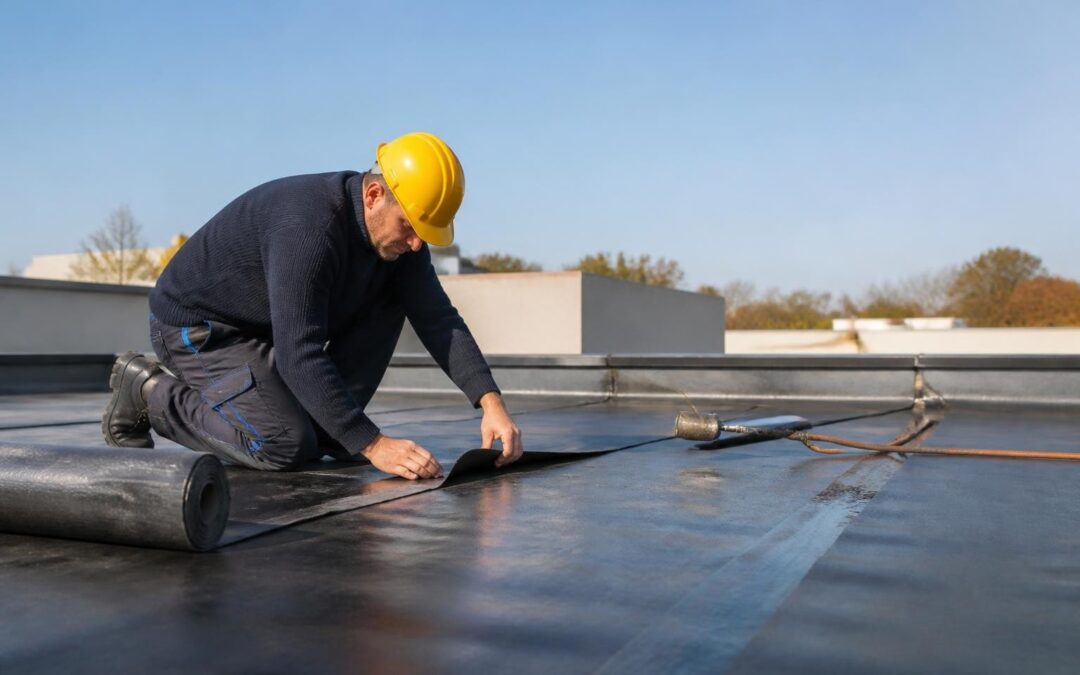
Understanding the financial implications of maintaining a flat roof is essential for property owners in Los Angeles and surrounding areas. Whether you own a commercial building or a residential property with a flat or low-slope roof, repair costs can vary significantly based on multiple factors. This comprehensive guide breaks down what you can expect to pay for flat roof repairs in 2026, helping you budget effectively and make informed decisions about your roofing needs.
Understanding Flat Roof Repair Cost Variables
The flat roof repair cost depends on several interconnected factors that directly impact your final bill. Unlike pitched roofs, flat roofs present unique challenges and opportunities for repair, making cost estimation more complex.
Material type serves as the primary cost driver. Your roof might feature EPDM rubber, TPO, PVC, modified bitumen, or built-up roofing (BUR). Each material has different price points for both the material itself and the specialized labor required for installation.
Key Factors Affecting Price
Beyond material selection, several variables influence your total repair expenses:
- Extent of damage: Small leaks versus widespread deterioration
- Accessibility: Roof height and ease of access for workers and equipment
- Labor rates: Geographic location and contractor expertise
- Repair urgency: Emergency repairs typically cost 25-50% more
- Permits and inspections: Required in most Los Angeles County jurisdictions
- Underlying structural issues: Hidden damage beneath the roofing membrane
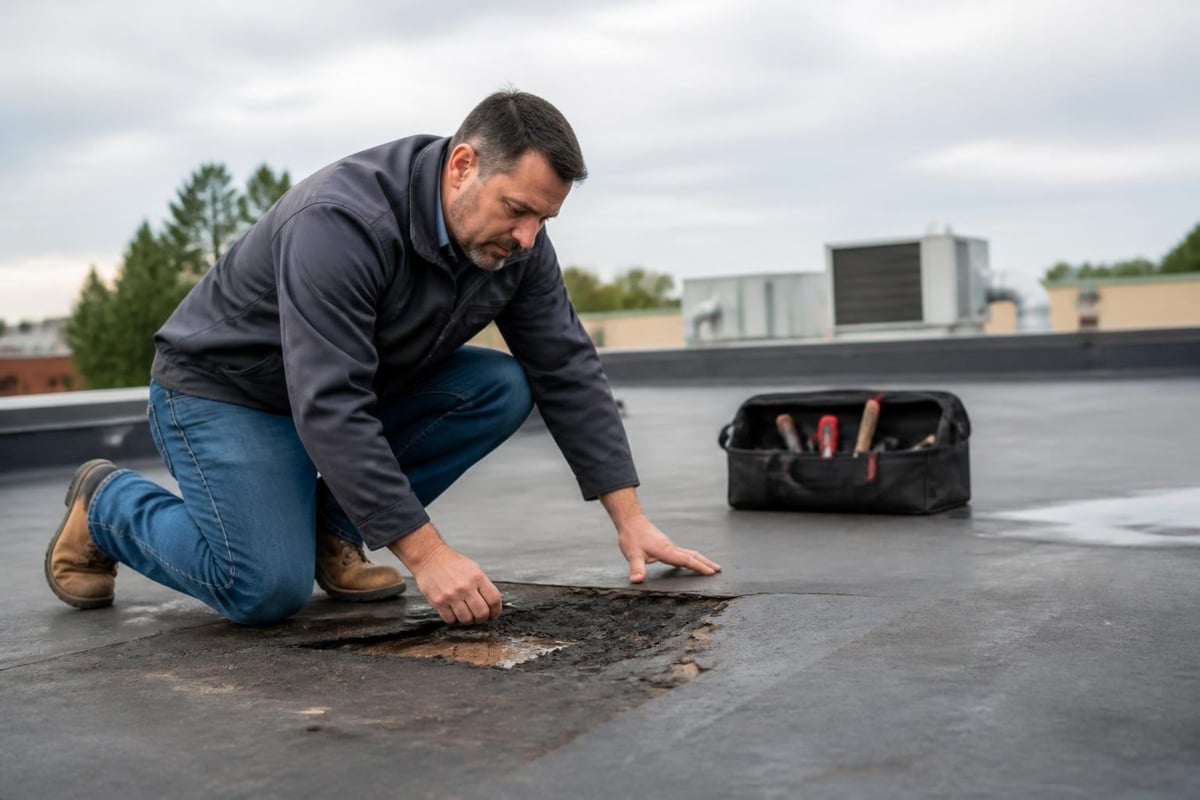
The detailed breakdown of flat roof repair costs shows that minor repairs can range from $150 to $500, while major repairs or partial replacements might cost $1,500 to $7,000 or more. In the Los Angeles market, where labor costs run higher than the national average, these figures can increase by 15-30%.
Average Costs by Repair Type
Different types of damage require distinct repair approaches, each with its own pricing structure. Understanding these categories helps you anticipate costs more accurately.
| Repair Type | Average Cost Range | Typical Duration |
|---|---|---|
| Minor leak patching | $200 – $600 | 2-4 hours |
| Seam repair | $400 – $1,200 | 4-6 hours |
| Ponding water fixes | $500 – $2,500 | 1-3 days |
| Blister repair | $300 – $800 | 3-5 hours |
| Flashing replacement | $600 – $1,500 | 1-2 days |
| Membrane section replacement | $1,000 – $4,000 | 2-4 days |
Small-Scale Repairs
For minor issues like isolated leaks or small cracks, homeowners typically spend between $200 and $800. These repairs often involve patching a specific area where the membrane has failed or sealing penetrations around vents, pipes, or HVAC units.
Coating applications for preventative maintenance or addressing minor surface deterioration generally cost $2 to $4 per square foot, making a 1,000-square-foot roof coating project run approximately $2,000 to $4,000 including labor.
Medium to Large Repairs
When damage extends across multiple areas or affects critical components like drainage systems, flat roof repair costs escalate considerably. Addressing ponding water issues might require installing additional drains or adjusting the roof slope, pushing costs into the $1,500 to $5,000 range.
Comprehensive seam repair across an aging roof section can run $1,500 to $3,000 for residential properties and significantly more for commercial buildings with extensive square footage.
Material-Specific Repair Costs
Each flat roofing material presents unique repair challenges and associated costs. Your existing roof type dictates both the repair methodology and the pricing structure.
EPDM Rubber Roofing
EPDM (ethylene propylene diene monomer) rubber roofing is popular for its durability and relatively straightforward repairs. Patching costs typically range from $4 to $8 per square foot for professional installation.
Common EPDM repairs include:
- Seam separation: $300 to $900
- Puncture patching: $200 to $500
- Corner detachment: $400 to $1,000
The material itself is affordable, but proper surface preparation and adhesion techniques require experienced contractors to ensure lasting repairs.
TPO and PVC Membranes
Thermoplastic membranes like TPO and PVC offer heat-welded seams that generally outlast adhesive-based systems. However, when repairs are needed, they require specialized equipment.
According to material-specific cost analysis, TPO repair costs average $5 to $10 per square foot, while PVC repairs run slightly higher at $6 to $12 per square foot due to the premium material cost.
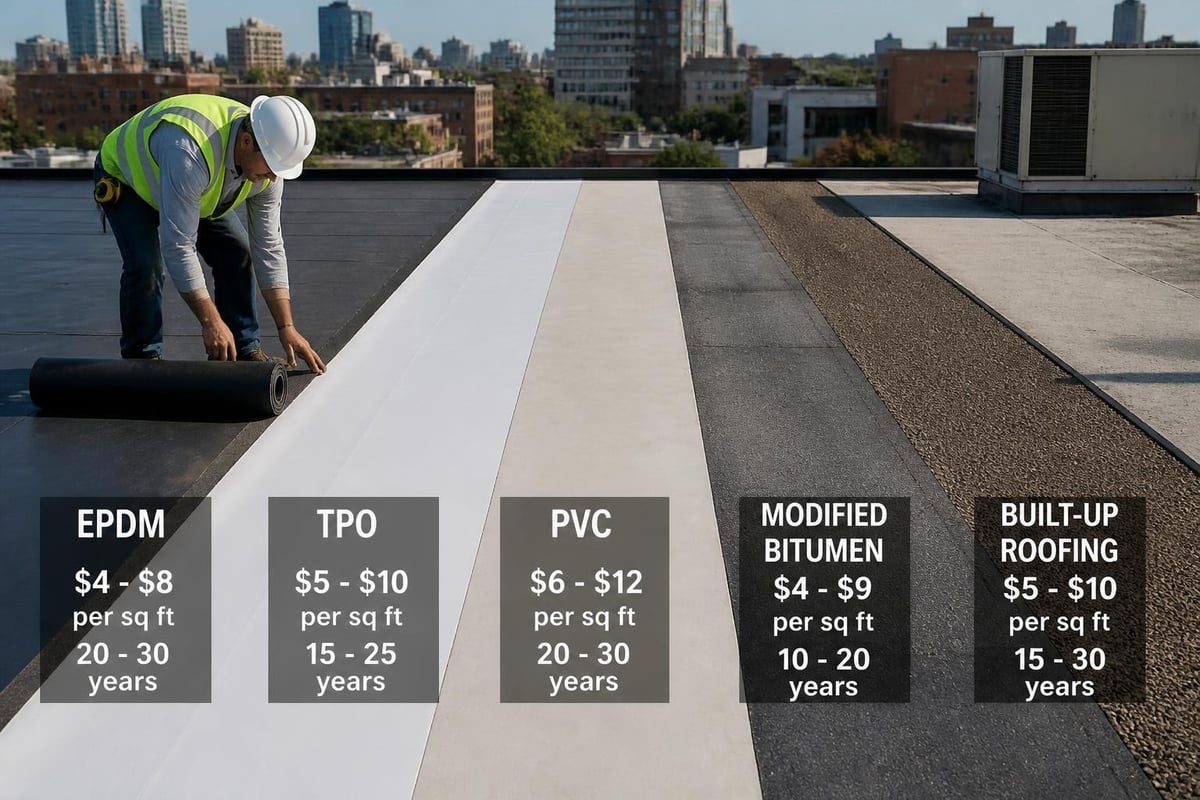
| Material Type | Cost Per Sq Ft | Repair Difficulty | Longevity After Repair |
|---|---|---|---|
| EPDM | $4 – $8 | Moderate | 10-15 years |
| TPO | $5 – $10 | Moderate-High | 12-18 years |
| PVC | $6 – $12 | High | 15-20 years |
| Modified Bitumen | $3 – $7 | Low-Moderate | 8-12 years |
| Built-Up (BUR) | $4 – $9 | Moderate | 10-14 years |
Modified Bitumen and Built-Up Roofing
These traditional systems use multiple layers of asphalt-based materials. Repairs often involve torch application or cold adhesives, with costs ranging from $3 to $9 per square foot depending on the number of layers requiring replacement.
For property owners with these older systems, extensive repairs might prompt consideration of complete roof replacement, especially when repair costs exceed 40-50% of a new installation.
Commercial vs. Residential Repair Costs
The distinction between commercial and residential flat roof repair cost reflects differences in scale, complexity, and regulatory requirements. Commercial projects typically involve larger square footage and more stringent building codes.
Residential Flat Roof Repairs
Homeowners in Los Angeles with flat or low-slope sections on their properties face average repair costs of $800 to $2,500 for typical projects. These repairs often address:
- Patio cover leaks
- Garage roof issues
- Modern architectural flat sections
- Attached living space flat roofs
Residential repairs benefit from smaller project scales but may face challenges in material matching and aesthetic considerations that don't apply to purely functional commercial roofs.
Commercial Property Repairs
Commercial flat roofs present economy-of-scale advantages but also complexity premiums. Commercial flat roof repair costs depend heavily on business disruption concerns, warranty requirements, and code compliance.
A typical commercial repair project runs $2,000 to $10,000, with large-scale repairs or emergency interventions potentially reaching $20,000 or more. Many commercial property owners maintain annual maintenance contracts costing $500 to $2,000 that include minor repairs and inspections.
Labor Costs and Contractor Selection
Labor represents 40-60% of your total flat roof repair cost in most scenarios. In the Los Angeles metropolitan area, roofing labor rates range from $45 to $85 per hour depending on contractor expertise and project complexity.
Contractor selection criteria:
- Licensed and insured: California requires specific roofing contractor licenses
- Flat roof specialization: Not all roofers excel at low-slope systems
- Material expertise: Match your roof type to contractor experience
- References and portfolio: Verify similar project completion
- Written estimates: Detailed scope prevents scope creep and surprises
Understanding Labor Components
Professional roofing contractors factor multiple elements into their labor charges beyond simple installation time:
- Tear-off and disposal: Removing damaged sections
- Surface preparation: Critical for adhesion and longevity
- Safety equipment: Fall protection and scaffolding
- Cleanup and site restoration: Debris removal and property protection
- Warranty administration: Documentation and follow-up
Quality contractors provide itemized estimates that break down these components, giving you visibility into where your money goes and helping you compare quotes effectively.
When to Repair vs. Replace
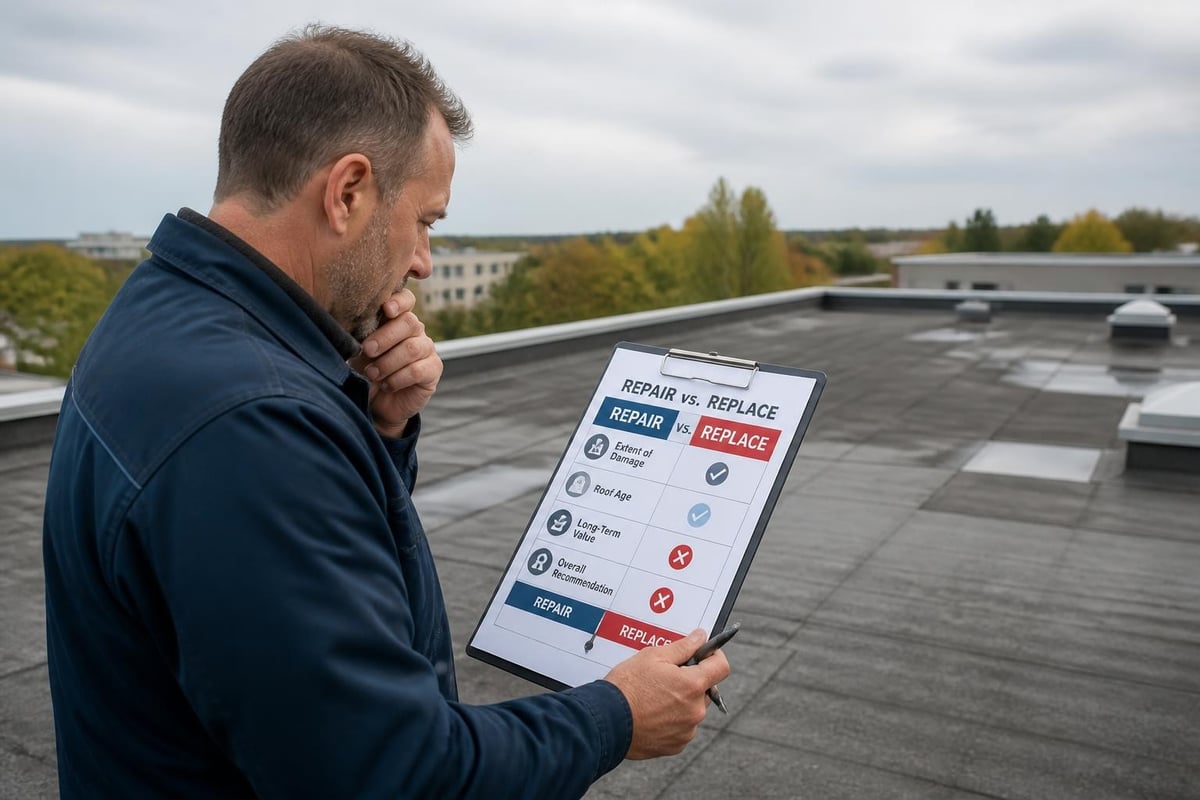
One of the most critical decisions affecting your flat roof repair cost is determining whether repair makes financial sense or if replacement offers better long-term value.
Repair Decision Factors
Repair makes sense when:
- Damage affects less than 25-30% of the roof surface
- The existing roof is less than halfway through its expected lifespan
- No underlying structural issues exist
- The budget doesn't allow for full replacement
- Recent installation means warranties still apply
Minor repairs on relatively new roofs deliver excellent return on investment, extending roof life by years for minimal cost.
Replacement Indicators
Consider full replacement when repair costs approach 50% of replacement costs, multiple areas show deterioration, or the roof exceeds 75% of its expected lifespan. The cost considerations for new roofs show that while initial investment is higher, the long-term cost per year often favors replacement over repeated repairs.
Hidden Costs and Budget Considerations
Beyond the obvious repair expenses, several hidden costs can impact your total project budget. Smart property owners account for these potential additions when planning flat roof repairs.
Additional Expenses to Consider
Property owners should budget an additional 10-20% beyond the quoted repair cost for potential unforeseen issues:
- Structural repairs: Damaged decking or supports discovered during repair
- Code upgrades: Bringing older roofs to current standards
- Drainage improvements: Required when ponding issues emerge
- Insulation replacement: Water-damaged insulation beneath the membrane
- Temporary weatherproofing: Tarping during multi-day projects
In Los Angeles, permit fees typically range from $150 to $500 depending on project scope, with inspection fees adding another $100 to $300. Many contractors include these in their estimates, but always verify before signing contracts.
Financing and Payment Options
Understanding flat roof repair expenses by problem type helps you plan financing if needed. Many roofing companies offer:
- Payment plans for larger projects
- Financing through third-party lenders
- Seasonal discounts during slower periods
- Multi-service bundling discounts
Emergency repairs rarely qualify for discounts, making preventative maintenance and early intervention financially advantageous.
Regional Cost Variations in Los Angeles
Los Angeles County's diverse geography and varying building codes create regional cost differences for flat roof repairs. Coastal properties face different challenges than inland locations, affecting both material selection and pricing.
Los Angeles Market Factors
Several local factors influence flat roof repair cost in Southern California:
- Higher labor rates: Skilled trades command premium wages
- Strict building codes: California's stringent requirements add compliance costs
- UV exposure: Intense sunshine accelerates material degradation
- Seismic considerations: Earthquake-resistant installation techniques
- Limited seasonal variation: Year-round construction means less seasonal pricing fluctuation
Professional roof repairs from experienced local contractors account for these regional factors, ensuring repairs meet California's demanding standards while delivering lasting value.
Coastal areas from Malibu to Long Beach face salt air exposure that corrodes flashing and fasteners faster, potentially increasing repair frequency. Inland valleys experience more extreme temperature fluctuations that stress membrane seams and adhesives.
Preventative Maintenance and Cost Savings
Investing in regular maintenance significantly reduces long-term flat roof repair cost by catching issues early when fixes are simple and inexpensive. A comprehensive maintenance program costs substantially less than emergency repairs or premature replacement.
Maintenance Program Elements
Effective flat roof maintenance includes:
- Biannual inspections (spring and fall)
- Debris removal after storms
- Drain and gutter cleaning
- Minor seal touch-ups
- Detailed documentation and photography
Annual maintenance contracts typically cost $300 to $800 for residential properties and $800 to $2,500 for commercial buildings, depending on roof size and complexity.
Return on Maintenance Investment
Studies show that every dollar spent on preventative maintenance saves $4 to $5 in future repair costs. For a typical 1,500-square-foot flat roof, annual maintenance costing $500 can prevent repairs averaging $2,000 to $2,500 over the roof's lifespan.
Early leak detection prevents water damage to interior spaces, insulation, and structural components, protecting your investment beyond just the roof surface. According to comprehensive repair cost guides, water infiltration damage often costs five to ten times more to remediate than simple membrane repairs.
DIY vs. Professional Repair Considerations
While some property owners consider DIY repairs to reduce flat roof repair cost, this approach carries significant risks that often result in higher long-term expenses.
When DIY Makes Sense
Limited DIY scenarios include:
- Temporary emergency patching until professionals arrive
- Minor sealant touch-ups on non-critical areas
- Debris removal and basic cleaning
- Visual inspections and documentation
Even these limited interventions require appropriate safety equipment and basic knowledge of flat roof systems.
Professional Repair Advantages
Licensed roofing contractors bring expertise that justifies their costs:
| DIY Approach | Professional Service |
|---|---|
| No warranty coverage | 1-10 year warranties typical |
| Risk of improper repairs | Code-compliant installation |
| Safety hazards | Insured and bonded work |
| Limited material access | Wholesale pricing advantages |
| Unknown underlying issues | Comprehensive problem diagnosis |
Professional repairs include proper surface preparation, compatible materials, and installation techniques that ensure repairs last. The detailed analysis of repair costs demonstrates that professional repairs typically last 3-5 times longer than DIY attempts, making them more cost-effective despite higher initial expense.
Getting Accurate Repair Estimates
Obtaining multiple detailed estimates is crucial for understanding your specific flat roof repair cost and ensuring fair pricing. The estimate process reveals contractor professionalism and attention to detail.
What Quality Estimates Include
Comprehensive repair estimates should detail:
- Specific repair methods: Not just "fix leak" but detailed methodology
- Material specifications: Brand names, grades, and quantities
- Labor breakdown: Hours or days required with rates
- Warranty terms: Coverage duration and what's included
- Timeline: Start date and expected completion
- Payment schedule: Deposit requirements and milestone payments
Avoid contractors who provide verbal estimates or single-line quotes. Detailed written estimates protect both parties and provide accountability.
Questions to Ask Contractors
Before committing to a repair contractor, ask:
- How long have you specialized in flat roofing?
- Can you provide references for similar repairs?
- What warranties do you offer on labor and materials?
- How do you handle unexpected issues discovered during repair?
- Are permits and inspections included in your quote?
- What happens if weather delays the project?
Contractors who answer these questions thoroughly and confidently demonstrate professionalism worth paying for.
Emergency Repair Costs and Planning
Emergency flat roof repairs command premium pricing but prevent catastrophic damage when leaks threaten interior spaces, inventory, or operations. Understanding emergency cost structures helps you make informed decisions during crises.
Emergency Service Premiums
After-hours, weekend, and holiday repairs typically add 50-100% to standard rates. A repair normally costing $800 might run $1,200 to $1,600 as an emergency service.
Emergency situations requiring immediate response:
- Active leaks during rainstorms
- Wind damage exposing interior spaces
- Structural compromise threatening safety
- Water pooling near electrical systems
For non-emergency situations that feel urgent, waiting for regular business hours can save hundreds or thousands of dollars while still addressing the issue promptly.
Emergency Preparedness
Smart property owners prepare for roofing emergencies by:
- Maintaining relationships with reputable contractors before problems arise
- Keeping emergency tarps and basic patching materials on hand
- Documenting roof condition with photos for insurance claims
- Understanding insurance coverage and deductibles
- Creating a maintenance fund for unexpected repairs
This preparation reduces stress and costs when roofing problems inevitably occur.
Insurance Coverage and Claims
Many flat roof repairs qualify for insurance coverage, potentially reducing your out-of-pocket flat roof repair cost significantly. Understanding your policy and the claims process maximizes your benefits.
Coverage Determination Factors
Insurance typically covers storm damage, falling objects, and sudden unexpected events but excludes wear-and-tear or maintenance-related issues. Policy specifics vary widely, making thorough review essential.
Documentation for successful claims:
- Photos of damage from multiple angles
- Written contractor assessments
- Weather reports confirming storm timing
- Maintenance records showing proper care
- Repair estimates from licensed contractors
Filing claims promptly improves approval chances, as delays can suggest the damage predated the covered event.
Working with Adjusters
Insurance adjusters may initially estimate lower repair costs than contractors quote. Experienced roofing professionals can provide detailed justifications for necessary repairs, helping adjusters understand true cost requirements.
Some property owners benefit from public adjusters who advocate on their behalf, though these services typically cost 10-15% of the claim settlement.
Understanding flat roof repair cost empowers property owners to budget effectively, choose quality contractors, and maintain their roofing investments wisely. Whether addressing minor leaks or planning major repairs, informed decisions based on material type, damage extent, and contractor expertise ensure optimal value for your investment. When you need expert flat roof repair services in Los Angeles and surrounding areas, Proof Your Roof provides comprehensive solutions backed by quality workmanship and customer-focused service.