
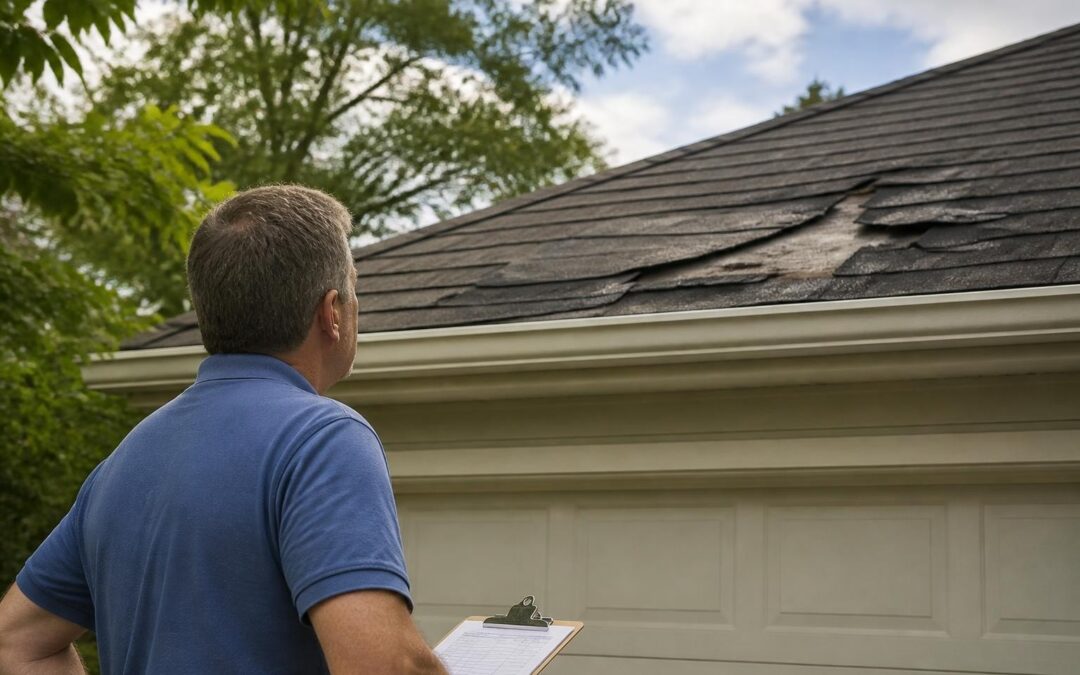
Your garage roof protects vehicles, tools, and belongings from Los Angeles's occasional heavy rains and intense sun exposure. When damage strikes, whether from wind, age, or falling debris, addressing a garage repair roof project quickly prevents minor issues from escalating into costly structural problems. Many homeowners underestimate the importance of their garage roof until water stains appear on the ceiling or daylight becomes visible through gaps in the roofing material. Understanding repair options, costs, and when to involve professionals helps property owners make informed decisions that protect their investment and maintain property value.
Understanding Common Garage Roof Problems
Garage roofs face unique challenges compared to main house roofs. Detached garages often receive less attention during routine maintenance inspections, allowing small problems to develop into significant damage over time.
Leak Sources and Water Damage
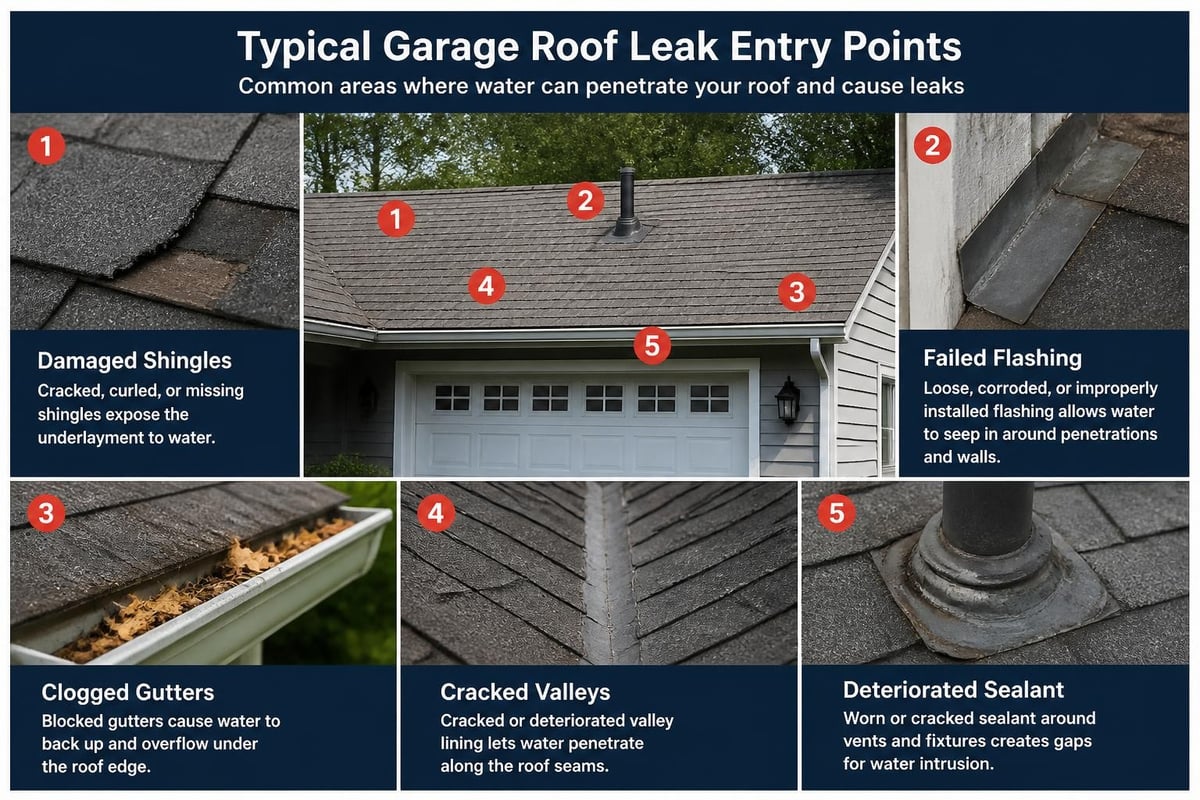
Water infiltration represents the most common garage roof issue in residential properties. Leaks typically originate from:
- Damaged or missing shingles that expose underlayment to weather
- Deteriorated flashing around vents, chimneys, or where the garage connects to the house
- Clogged gutters that force water under roof edges
- Cracked roof valleys where two roof planes meet
- Worn sealant around penetrations and fasteners
Small leaks often go unnoticed until water damage becomes visible on interior surfaces. By this point, moisture may have compromised roof decking, insulation, or ceiling materials. The Building Science Corporation provides detailed insights on moisture control principles that apply to attached garage structures.
Structural Concerns Beyond Surface Damage
Not all garage repair roof projects involve simple shingle replacement. Structural issues require more extensive intervention:
| Problem Type | Warning Signs | Urgency Level |
|---|---|---|
| Sagging roof deck | Visible dips or waves in roofline | High – indicates potential collapse risk |
| Rafter damage | Interior ceiling cracks, uneven surfaces | High – structural integrity compromised |
| Rot in decking | Soft spots when walking on roof, water stains | Medium to High – spreads if untreated |
| Inadequate ventilation | Excessive heat, moisture buildup, premature shingle aging | Medium – accelerates deterioration |
Understanding whether damage is cosmetic or structural determines repair scope and budget. Professional inspection reveals hidden problems that aren't apparent from ground level or inside the garage.
DIY Garage Roof Repair Considerations
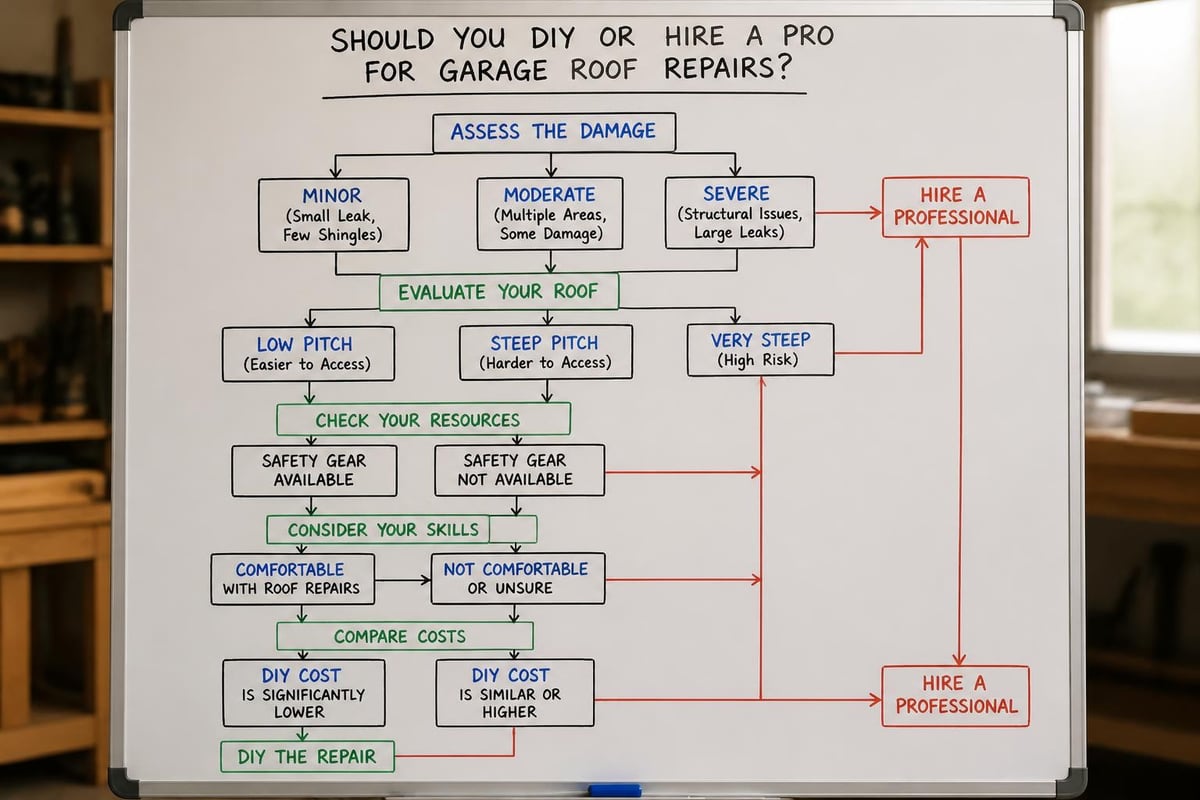
Homeowners with basic construction skills can tackle certain garage repair roof projects themselves. However, understanding limitations and safety requirements is essential before climbing onto any roof structure.
When DIY Makes Sense
Minor repairs on low-slope or easily accessible garage roofs may be appropriate for experienced DIYers. Suitable projects include:
Shingle replacement for small sections (under 10 square feet) with matching materials available. Individual damaged shingles can be carefully removed and replaced without disturbing surrounding areas. The Asphalt Roofing Manufacturers Association offers guidance on proper repair techniques that maintain manufacturer warranties.
Sealant application around vents, chimneys, and flashing where existing materials remain intact but sealant has deteriorated. Quality roofing cement applied correctly extends component life by several years.
Gutter cleaning and minor repairs that prevent water backup under roof edges. While technically not roof work, gutter maintenance prevents common leak causes.
Safety and Liability Concerns
Working at height carries inherent risks that professionals manage through training, equipment, and insurance coverage. Homeowners attempting garage repair roof work should consider:
- Fall protection equipment requirements for roofs with slopes exceeding 4:12
- Ladder stability and proper positioning techniques
- Weather conditions (never work on wet or icy surfaces)
- Electrical hazards from nearby power lines
- Personal liability if injury occurs
Many insurance policies have specific exclusions for self-performed roofing work. Permits may also be required depending on repair scope, as outlined in ICC building code resources.
Professional Garage Roof Repair Process
Hiring qualified contractors ensures repairs meet code requirements and industry standards while protecting homeowners from liability. The professional approach to garage repair roof projects follows systematic procedures.
Initial Assessment and Inspection
Reputable roofing contractors begin with thorough inspections before providing estimates. This process includes:
- Exterior examination of all roofing materials, flashing, and drainage systems
- Interior inspection checking for water stains, mold, and structural damage
- Attic or crawl space review assessing ventilation, insulation, and decking condition from below
- Documentation through photographs and detailed notes
- Written estimate itemizing materials, labor, and timeline
Professional inspections often reveal problems homeowners haven't noticed. Contractors experienced with Los Angeles area construction understand regional climate challenges and local building code requirements. NRCA guidelines for selecting contractors help homeowners evaluate qualifications and proposals.
Repair Execution and Quality Standards
Professional garage repair roof work follows manufacturer specifications and industry best practices:
- Proper material staging to avoid overloading roof structures
- Weather monitoring to ensure installation occurs during appropriate conditions
- Code-compliant techniques for all flashing, fastening, and sealing
- Matching existing materials to maintain aesthetic consistency
- Cleanup protocols removing all debris and nails from property
Quality contractors stand behind their work with warranties covering both materials and labor. This protection provides peace of mind that DIY repairs cannot match.
Cost Factors in Garage Roof Repair
Budgeting for garage repair roof projects requires understanding multiple cost variables. Los Angeles area pricing reflects local labor rates, material availability, and permitting requirements.
Material and Labor Breakdown
Repair costs vary significantly based on project scope:
| Repair Type | Typical Cost Range | Timeframe |
|---|---|---|
| Minor shingle replacement (10-20 sq ft) | $300 – $800 | 2-4 hours |
| Flashing repair/replacement | $400 – $1,200 | Half day |
| Leak repair with decking replacement | $800 – $2,500 | 1-2 days |
| Full section replacement (100+ sq ft) | $2,000 – $5,000 | 2-3 days |
| Complete garage roof replacement | $3,500 – $12,000+ | 3-7 days |
These ranges reflect typical Los Angeles pricing for standard asphalt shingle roofs on detached single-car garages. Tile roofs, metal roofing, or larger structures increase costs substantially.
Labor typically represents 60-70% of total repair expenses. Material costs depend on quality grade, with premium shingles costing twice as much as builder-grade options. However, matching existing roof materials often requires using similar quality levels to maintain appearance.
Hidden Costs and Budget Planning
Smart homeowners budget beyond initial estimates to account for potential discoveries:
Decking replacement becomes necessary when rot or water damage extends beyond surface roofing. Wood sheathing replacement adds $3-7 per square foot to project costs.
Permit fees vary by municipality and repair scope. Los Angeles area jurisdictions may require permits for structural repairs or work exceeding certain square footage thresholds.
Ventilation improvements often accompany repair work when inspections reveal inadequate airflow contributing to premature material failure.
Gutter upgrades make sense when existing drainage systems prove inadequate or show significant wear.
Building a 15-20% contingency into garage repair roof budgets accommodates unexpected findings without derailing projects. When damage results from storms or other insured events, understanding the claims process helps maximize coverage. The National Association of Insurance Commissioners provides guidance on filing homeowners claims for roof damage.
Repair Versus Replacement Decision
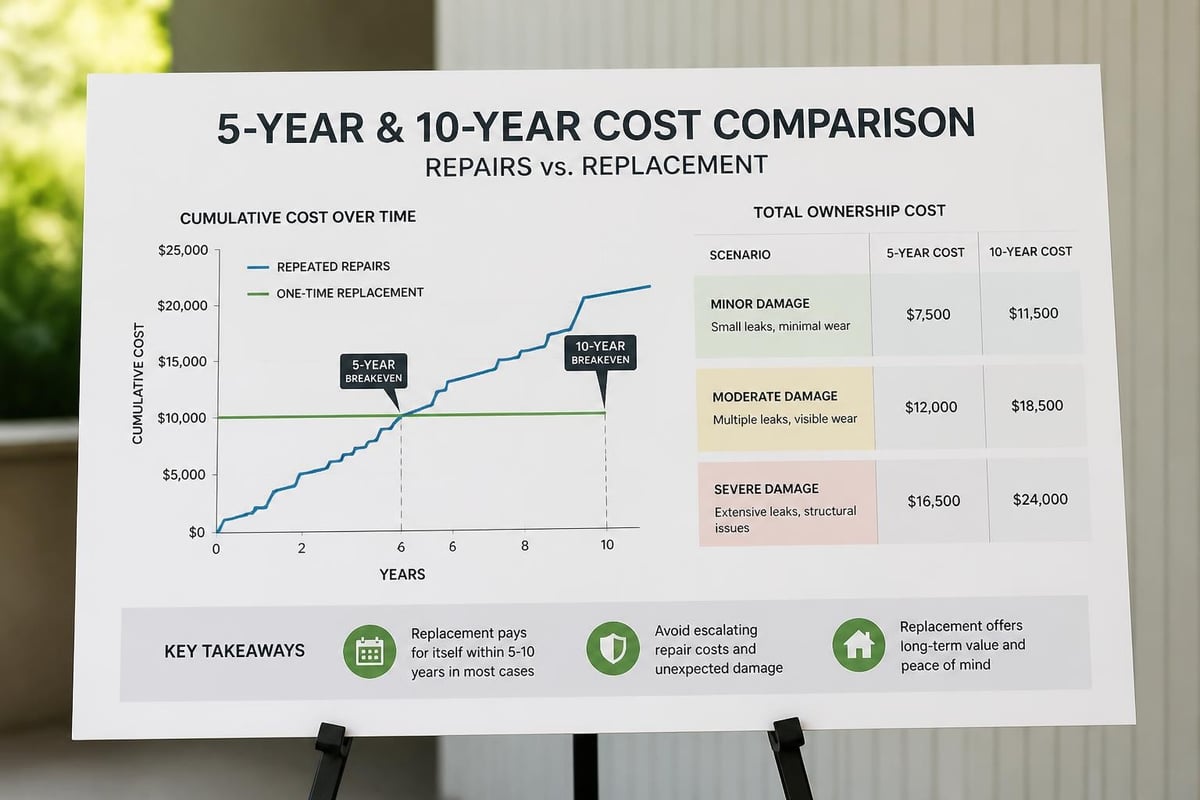
Not every damaged garage roof requires complete replacement. However, certain conditions make full replacement more cost-effective than ongoing repairs.
When Repairs Make Financial Sense
Targeted garage repair roof work proves economical when:
- Damage is localized to one area without widespread deterioration
- Roof age is under 15 years for asphalt shingles with reasonable remaining lifespan
- Structural components remain sound with no decking or rafter damage
- Matching materials are available to maintain aesthetic consistency
- Budget constraints make replacement unfeasible in the near term
Minor repairs extend roof life when performed correctly using quality materials. Regular maintenance and prompt attention to small problems prevent accelerated deterioration.
Replacement Indicators
Complete garage roof replacement becomes the smarter investment under these circumstances:
- Age exceeds expected lifespan (20+ years for asphalt shingles)
- Multiple repair areas across different roof sections
- Chronic leak problems that recur despite previous repair attempts
- Visible curling, cupping, or granule loss affecting more than 30% of surface area
- Energy efficiency goals requiring modern ventilation and insulation upgrades
For homeowners facing extensive garage repair roof needs on aging structures, roof replacement services often provide better long-term value than investing thousands in repairs to systems nearing the end of their service life. Professional contractors can evaluate whether repair or replacement offers superior return on investment based on specific conditions.
Material Options for Garage Roof Repairs
Matching existing materials maintains aesthetic consistency, but upgrades sometimes make sense during major repair projects. Understanding options helps homeowners make informed decisions.
Asphalt Shingle Repairs
Asphalt shingles dominate residential roofing in Los Angeles due to cost-effectiveness and ease of installation. For garage repair roof work, asphalt offers:
- Wide availability in colors matching most existing roofs
- Moderate cost compared to tile or metal alternatives
- Straightforward repair with individual shingle replacement capability
- Decent lifespan of 20-30 years depending on quality grade
Three-tab shingles cost less but offer shorter lifespans than architectural (dimensional) shingles. When repairing sections, using the same style and manufacturer prevents visible mismatches. However, color variations naturally occur as existing shingles age and fade.
Alternative Materials for Upgrades
Some homeowners use garage repair roof projects as opportunities to upgrade materials:
Metal roofing provides 40-70 year lifespans with minimal maintenance. Initial costs run 2-3 times higher than asphalt, but long-term value and energy efficiency benefits appeal to many property owners. Metal excels in fire-prone areas and withstands severe weather better than most alternatives.
Modified bitumen works well for low-slope garage roofs where shingles aren't appropriate. This rolled roofing product installs quickly and handles ponding water better than standard asphalt shingles.
Tile roofing matches main house aesthetics on properties with clay or concrete tile roofs. Tile costs significantly more than asphalt but delivers superior durability and classic California architectural appeal.
Material selection for garage repair roof projects should consider compatibility with existing structures, budget constraints, and long-term maintenance preferences. The NRCA roofing guidelines provide comprehensive information on material characteristics and appropriate applications.
Preventive Maintenance to Minimize Future Repairs
Proactive care extends garage roof life and reduces emergency repair frequency. Simple maintenance tasks prevent common problems before they require professional intervention.
Seasonal Inspection Checklist
Homeowners should inspect garage roofs twice annually, ideally in spring and fall:
- Visual examination from ground level checking for missing, curled, or damaged shingles
- Gutter cleaning to ensure proper drainage away from roof edges
- Tree trimming to prevent branch abrasion and leaf accumulation
- Flashing inspection around all penetrations and transitions
- Interior checks for water stains, mold, or pest infiltration
Binoculars allow detailed roof viewing without climbing ladders. Documenting conditions through dated photographs creates records helpful for tracking deterioration rates and planning future garage repair roof budgets.
Professional Maintenance Services
Annual professional inspections cost $150-400 but often prevent expensive emergency repairs. Trained inspectors identify subtle problems like:
- Loose or lifting shingles that haven't yet blown off
- Deteriorating sealant before leaks develop
- Ventilation deficiencies causing premature aging
- Minor flashing gaps easily sealed before water intrusion occurs
- Granule loss patterns indicating approaching replacement needs
Many roofing contractors include complimentary inspections with repair or installation services. Establishing relationships with qualified professionals ensures quick response when urgent garage repair roof needs arise.
Permit Requirements and Code Compliance
Building departments regulate roofing work to ensure safety and proper construction standards. Understanding permit requirements prevents project delays and legal complications.
When Permits Are Necessary
Los Angeles area jurisdictions typically require permits for:
- Structural repairs involving rafters, trusses, or decking replacement
- Complete roof replacement regardless of material or size
- Work exceeding specific square footage thresholds (varies by city)
- Addition of new penetrations like vents or skylights
- Material changes that alter roof weight or fire ratings
Minor repairs often proceed without permits, but property owners should verify requirements with local building departments before starting work. Unpermitted garage repair roof projects can complicate property sales and insurance claims.
Code Compliance Considerations
Current building codes mandate specific practices:
- Proper fastening schedules based on wind exposure and roof slope
- Adequate ventilation meeting minimum airflow requirements
- Fire-resistant materials in wildfire interface zones
- Edge protection preventing wind uplift at eaves and rakes
- Flashing details meeting water infiltration prevention standards
Professional contractors stay current with code changes and ensure compliance. DIY repairs may inadvertently violate requirements, creating liability and potentially voiding insurance coverage.
Insurance Claims for Garage Roof Damage
Storm damage, falling trees, and other insured perils may trigger homeowners insurance coverage for garage repair roof costs. Understanding the claims process maximizes reimbursement while avoiding common pitfalls.
Documentation and Initial Response
When damage occurs, immediate steps protect claims:
- Photograph all damage from multiple angles before making temporary repairs
- Document the date and cause of damage (storm date, tree fall, etc.)
- Implement temporary protection like tarps to prevent additional water intrusion
- Notify your insurance carrier within the timeframe specified in your policy
- Obtain multiple estimates from licensed contractors
Insurance companies typically cover reasonable temporary repair costs. Save receipts for tarps, labor, and materials used to prevent further damage. These expenses often qualify for reimbursement even before formal claim approval.
Working with Adjusters and Contractors
Insurance adjusters assess damage to determine coverage amounts. Property owners should:
- Accompany adjusters during inspections to point out all damage areas
- Request detailed estimates from contractors familiar with insurance work
- Understand depreciation calculations that may reduce initial payouts
- Appeal low settlements when estimates significantly exceed adjuster assessments
- Verify contractor licensing before authorizing garage repair roof work
Some roofing contractors specialize in insurance claims and assist with documentation, estimate preparation, and negotiation processes. While convenient, homeowners should understand that these contractors work for them, not the insurance company. Getting independent estimates provides leverage during settlement negotiations.
Regional Considerations for Los Angeles Garages
Southern California's climate and construction practices create specific garage repair roof challenges. Local expertise proves valuable when addressing regional issues.
Climate-Related Wear Patterns
Los Angeles's Mediterranean climate produces unique deterioration patterns:
UV exposure from intense year-round sun accelerates shingle aging, particularly on south and west-facing roof planes. Premium shingles with enhanced UV resistance last longer than economy grades in this environment.
Thermal cycling between hot days and cool nights stresses roofing materials through expansion and contraction. This cycling eventually causes sealant failure and fastener backing-out.
Minimal rainfall means roofs may go months without water exposure, then face intense storms. This feast-or-famine pattern sometimes allows minor leaks to go unnoticed until major rain events overwhelm compromised areas.
Santa Ana winds create uplift forces that test roof edge attachment and expose poorly secured shingles. Coastal areas face salt air corrosion affecting metal flashing and fasteners.
Wildfire Considerations
Properties in wildfire interface zones face additional requirements:
- Class A fire-rated materials mandatory in high-risk areas
- Ember-resistant ventilation to prevent ignition from windblown embers
- Proper clearance between roofing and combustible materials
- Regular debris removal from roof surfaces and gutters
Garage repair roof projects in these zones must meet current wildfire safety standards even when replacing small sections. Upgrading from older materials to compliant products during repairs enhances property protection and may reduce insurance premiums.
Addressing garage repair roof needs promptly prevents minor damage from escalating into costly structural problems. Whether you need simple leak repairs, extensive damage restoration, or guidance on repair versus replacement decisions, working with experienced professionals ensures quality results that protect your property investment. Proof Your Roof brings decades of expertise to residential and commercial roofing projects throughout Los Angeles and surrounding areas, delivering the quality workmanship and transparent service your garage roof deserves.