

When planning a roofing project in Los Angeles, whether you're considering a complete replacement or addressing storm damage, understanding roofing free estimates is essential to making an informed decision. A comprehensive estimate provides more than just a bottom-line number-it offers transparency into material costs, labor requirements, project timelines, and the overall scope of work. For homeowners and business owners in Southern California, where diverse roofing materials from clay tiles to asphalt shingles are common, knowing what to expect and what questions to ask during the estimation process can save thousands of dollars and prevent costly misunderstandings down the road.
What Roofing Free Estimates Actually Include
A professional roofing estimate should provide a detailed breakdown of every aspect of your project. When contractors offer roofing free estimates, they're investing time and expertise to assess your specific needs, measure your roof's dimensions, and calculate material and labor requirements.
Essential Components of a Thorough Estimate
Every comprehensive roofing estimate should contain specific information that allows you to make an apples-to-apples comparison between contractors. According to the National Roofing Contractors Association, professional estimates include detailed descriptions of all work to be performed.
Key elements you should expect:
- Precise roof measurements (square footage)
- Specific material brands, models, and grades
- Labor costs broken down by task
- Disposal fees for old materials
- Permit costs and administrative fees
- Project timeline with start and completion dates
- Payment schedule and accepted methods
- Warranty information for materials and workmanship
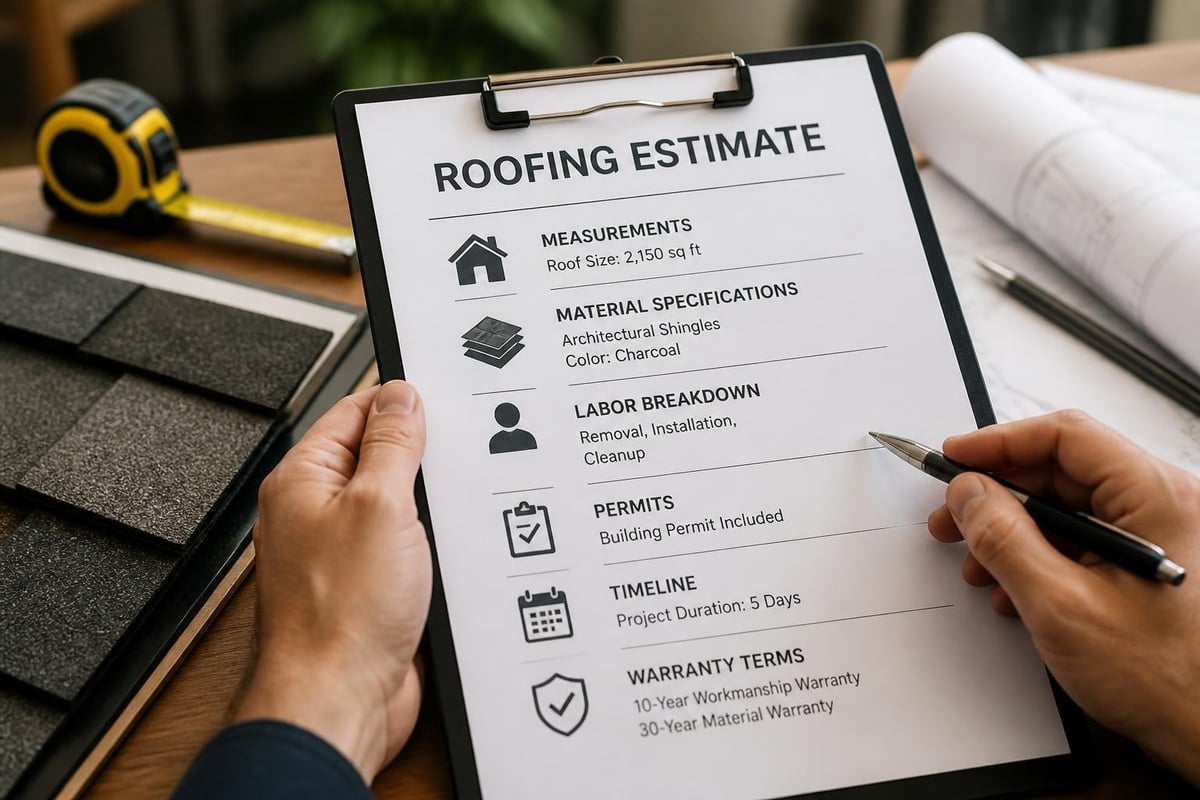
Many homeowners overlook the importance of warranty details in their estimates. Material warranties typically come from manufacturers and can range from 20 years to lifetime coverage, while workmanship warranties are provided by the contractor and usually last between one and ten years. Understanding both types protects your investment.
Material Specifications Matter
The difference between "asphalt shingles" and "GAF Timberline HDZ asphalt shingles with StrikeZone technology" isn't just semantics. Specific product names ensure you receive exactly what you're paying for and enable accurate price comparisons across multiple bids.
Material specifications should detail:
- Manufacturer and product line
- Color and style selections
- Underlayment type and brand
- Flashing materials
- Ventilation components
- Fasteners and adhesives
In Los Angeles, where temperatures can soar and UV exposure is intense, understanding material performance ratings becomes particularly important. The Department of Energy’s cool roofing guidance explains how reflective roofing materials can significantly reduce cooling costs in warm climates.
The Free Estimate Process: What to Expect
Understanding the timeline and steps involved in receiving roofing free estimates helps you plan accordingly and ensures you're working with contractors who follow professional standards.
Initial Contact and Scheduling
Most roofing companies schedule on-site inspections within three to seven business days of your initial inquiry. During scheduling, reputable contractors ask preliminary questions about your roof's age, visible damage, and whether you're filing an insurance claim.
Before the inspector arrives, prepare by gathering relevant documents such as previous roofing invoices, warranty information, and any correspondence with your insurance company if applicable. The Better Business Bureau recommends verifying contractor licenses and insurance before allowing anyone on your property.
The On-Site Inspection
A thorough inspection typically takes 30 to 90 minutes, depending on roof complexity and size. Professional estimators examine both exterior and interior components to identify all necessary work.
| Inspection Area | What Contractors Check | Why It Matters |
|---|---|---|
| Roof Surface | Shingle condition, cracking, granule loss | Determines replacement urgency |
| Flashing | Valley, chimney, and vent flashing integrity | Prevents future leaks |
| Attic Space | Ventilation, insulation, moisture damage | Affects roof lifespan and energy efficiency |
| Gutters & Drainage | Water flow, downspout placement | Protects foundation and landscaping |
| Structural Decking | Wood rot, sagging, structural damage | May require additional repairs |
When contractors offer roofing free estimates in Los Angeles, they must account for local building codes and permit requirements. California's strict regulations ensure roofing work meets seismic and fire safety standards, which can affect both material selection and labor costs.
Estimate Delivery Timeline
Most contractors deliver written estimates within 24 to 72 hours after the inspection. Delays beyond one week often indicate disorganization or capacity issues. Professional companies provide estimates in easy-to-read formats, either digitally or in printed proposals.

How to Compare Multiple Roofing Free Estimates
Gathering three to five estimates allows meaningful comparison and helps identify both fair market pricing and potential red flags. However, simply choosing the lowest bid often leads to disappointment.
Price Variance and What It Means
In the Los Angeles market, roofing estimates for similar projects can vary by 20 to 40 percent. This range reflects differences in material quality, contractor experience, warranty coverage, and business overhead.
When estimates differ significantly, investigate:
- Material grade differences (architectural vs. three-tab shingles)
- Scope of work variations (partial vs. complete tear-off)
- Included services (debris removal, attic ventilation upgrades)
- Subcontractor usage vs. in-house crews
- Insurance and licensing compliance
- Company reputation and track record
The Consumer Reports roofing buying guide emphasizes that extremely low bids may indicate shortcuts, inferior materials, or unlicensed work that can void manufacturer warranties and create liability issues.
Creating a Comparison Spreadsheet
Organize estimates in a standardized format to highlight differences and identify omissions. Create columns for each contractor and rows for specific line items.
Essential comparison categories:
- Total square footage measured
- Material brand and model
- Layers to be removed
- Underlayment type
- Ventilation improvements
- Warranty length and coverage
- Project duration
- Payment terms
- Cleanup and disposal
- Post-installation inspection
Some contractors include optional upgrades in their estimates, such as ice and water barrier in valleys or upgraded ridge vents. Understanding which items are essential versus optional helps you make informed decisions about where to allocate your budget.
Red Flags and Warning Signs in Free Estimates
Not all roofing free estimates represent legitimate, professional service. Recognizing warning signs protects you from scams, poor workmanship, and financial loss.
Common Estimate Red Flags
The Federal Trade Commission warns homeowners about contractors who use high-pressure tactics or offer "today only" pricing. Legitimate companies give you time to review estimates and ask questions.
Warning signs to watch for:
- Requests for full payment upfront
- No physical business address listed
- Pressure to sign immediately
- Vague material descriptions ("standard shingles")
- Missing license or insurance information
- Estimates provided without on-site inspection
- Offers to waive insurance deductibles
- Cash-only payment requirements
In California, the Contractors State License Board requires specific disclosures and consumer protections. Contractors must provide their license number on all estimates and contracts, and homeowners have a three-day right to cancel most home improvement contracts.
Insurance Claim Considerations
If you're filing an insurance claim for roof damage, you'll receive both an insurance adjuster's estimate and contractor estimates. The Insurance Information Institute explains that these estimates often differ because insurance companies calculate depreciation and use standardized pricing databases, while contractors provide current market rates.
When working with insurance claims:
- Share your insurance estimate with contractors
- Ask contractors to identify any coverage gaps
- Understand depreciation and recoverable amounts
- Document all damage thoroughly with photos
- Request contractors to attend insurance adjuster meetings
- Verify whether upgrades to current code are covered
Many Los Angeles homeowners find that their contractor's estimate exceeds their insurance payout, requiring them to cover the difference or negotiate with their insurance company for additional compensation.
Regional Considerations for Los Angeles Roofing Estimates
Los Angeles presents unique challenges and opportunities that affect roofing free estimates, from seismic requirements to fire-resistant materials.
Climate-Specific Factors
Southern California's Mediterranean climate means less rain than most regions but intense UV exposure and occasional extreme weather events. Contractors familiar with local conditions recommend materials and installation techniques that address these specific challenges.
Material longevity in Los Angeles depends heavily on UV resistance and heat reflection. Asphalt shingles in lighter colors or cool-roof-certified products extend roof life and reduce cooling costs. For homeowners interested in traditional aesthetics with modern performance, asphalt shingles roofing combines classic appearance with advanced weatherproofing technology.
Code Compliance and Permit Costs
Los Angeles County and city jurisdictions enforce strict building codes that affect roofing projects. Permit costs typically range from $150 to $500 depending on project scope and jurisdiction, and professional estimates include these fees.
| Permit Requirement | Typical Cost | Processing Time |
|---|---|---|
| Re-roofing Permit | $150-$300 | 3-5 business days |
| Structural Permit (if needed) | $300-$500 | 7-10 business days |
| Plan Review Fee | $100-$200 | Included in processing |
| Inspection Fee | Usually included | Scheduled after completion |
Contractors who omit permit costs from their estimates create unexpected expenses later. Professional companies handle all permitting and scheduling required inspections as part of their service.
Labor Market Dynamics
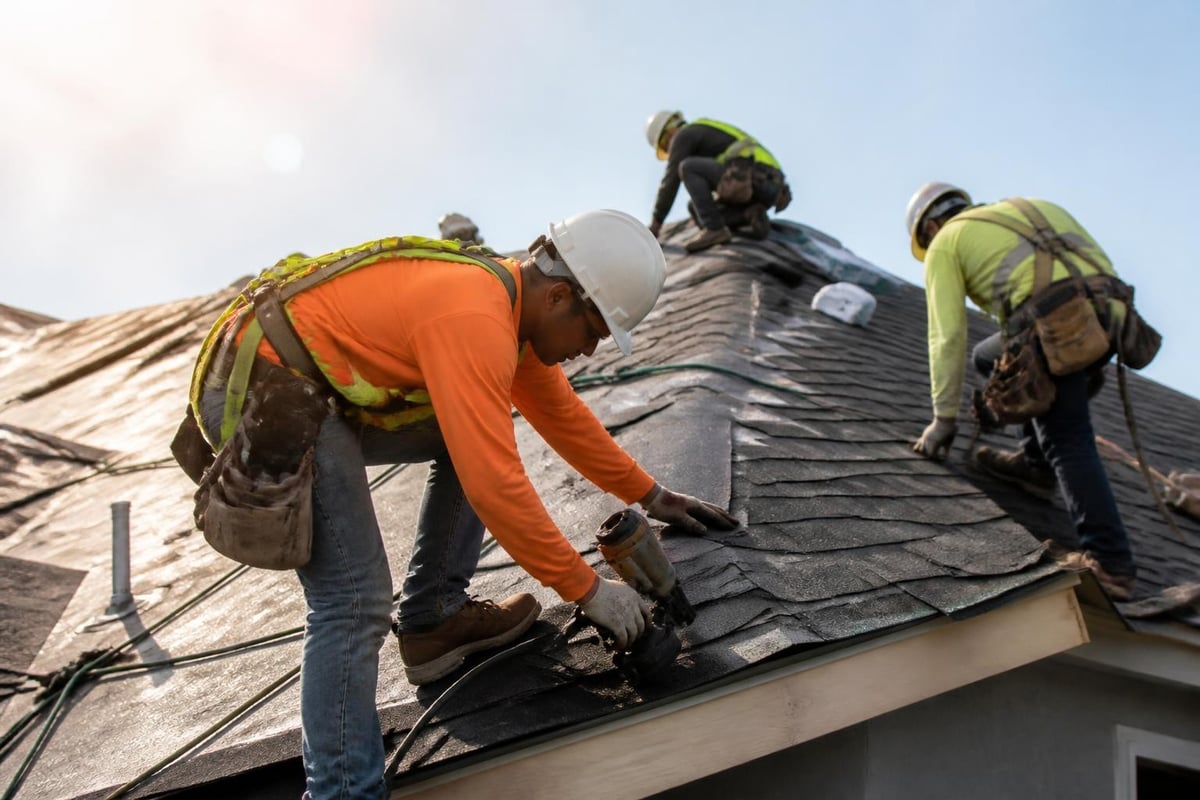
Los Angeles's competitive labor market influences roofing costs. Experienced roofing crews command premium rates, but their expertise translates to faster completion times, fewer callbacks, and superior workmanship. When comparing roofing free estimates, understanding that labor represents 60 to 70 percent of total project cost helps contextualize price differences.
Understanding Cost Estimation Methodologies
Professional roofing contractors use standardized methods to calculate accurate estimates, ensuring they can deliver the quoted price while maintaining profitability and quality standards.
Square Footage Calculations
Roofing is priced per "square," which equals 100 square feet. Accurate measurement is critical-errors of even one or two squares can mean thousands of dollars in material and labor miscalculations.
Contractors measure roof area by:
- Taking precise measurements from the roof surface
- Using aerial measurement technology
- Calculating from architectural plans
- Applying mathematical formulas based on home dimensions
Steep-pitch roofs, complex designs with multiple valleys and hips, and homes with numerous dormers or skylights require more labor and materials, increasing per-square costs.
Material and Labor Pricing
Contractors reference industry-standard cost data, such as RSMeans construction cost information, to ensure their estimates reflect current market conditions. These databases track regional material prices and labor rates, accounting for local market variations.
Material costs fluctuate based on petroleum prices (asphalt products), manufacturing capacity, and supply chain factors. Contractors who provide roofing free estimates assume these costs for the estimate's validity period, typically 30 to 60 days.
Typical labor cost factors:
- Removal and disposal of existing materials
- Installation of underlayment and ice barriers
- Shingle or tile installation
- Flashing fabrication and installation
- Ridge vent and ventilation work
- Cleanup and final inspection
Experienced contractors build contingencies into estimates for unforeseen conditions discovered during tear-off, such as rotted decking or structural damage that wasn't visible during inspection.
Questions to Ask When Reviewing Estimates
Engaging contractors in detailed discussions about their estimates demonstrates your seriousness and helps identify the most qualified professionals.
Material and Workmanship Questions
Before accepting any estimate, clarify exactly what you're purchasing. Vague descriptions leave room for substitutions or misunderstandings.
Essential questions about materials:
- What specific brand and product line will be installed?
- Are there alternative material options at different price points?
- How do material choices affect warranty coverage?
- What is the expected lifespan of recommended materials?
- Are materials in stock or will they require ordering?
Critical workmanship inquiries:
- Who will perform the actual work (employees or subcontractors)?
- What quality control processes do you follow?
- How do you protect my property during work?
- What happens if weather delays the project?
- How do you handle unexpected damage discovered during tear-off?
Warranty and Service Questions
Warranty coverage provides long-term value and peace of mind, but only if you understand what's covered and what isn't.
Ask contractors to explain:
- Material warranty registration process
- Workmanship warranty terms and exclusions
- How to file warranty claims
- Whether warranties transfer to new homeowners
- Maintenance requirements to keep warranties valid
Some manufacturers offer enhanced warranties when certified contractors install their products using specific installation methods. These warranties may cover labor costs for repairs, not just material replacement.
Making Your Final Decision
After reviewing roofing free estimates, checking references, and verifying credentials, you're ready to select a contractor. This decision balances cost, quality, timeline, and trust.
Beyond Price Considerations
While budget constraints are real, the lowest estimate rarely represents the best value. Consider the total cost of ownership, including expected lifespan, maintenance requirements, and energy savings.
A slightly higher estimate from a contractor with stellar references, proper insurance, and manufacturer certifications often delivers better long-term value than a bargain price from an unknown or underinsured company.
Evaluation criteria beyond price:
- Years in business and local reputation
- Manufacturer certifications
- Customer reviews and references
- Response time and communication quality
- Insurance coverage limits
- Warranty terms and backing
- Project timeline realism
Contract Finalization
Once you select a contractor, review the final contract carefully before signing. The contract should match the estimate in all material details, with the same specific product names, scope of work, and pricing.
California law provides homeowners with a three-day right to cancel most home improvement contracts. The contractor must provide cancellation forms and explain this right before you sign. Never sign a contract with blank spaces or unclear terms.
Ensure your contract specifies:
- Detailed scope of work
- Specific material brands and models
- Project start and completion dates
- Total cost and payment schedule
- Change order procedures
- Cleanup and disposal responsibilities
- Warranty information
- Lien release requirements
For projects exceeding $500, California contractors must provide a written contract. Projects over certain thresholds may require mechanics' lien notices to protect subcontractors and suppliers.
Seasonal Timing and Estimate Availability
The timing of your roofing project affects both pricing and contractor availability. Understanding seasonal patterns helps you plan strategically.
Peak Season Dynamics
Spring and fall represent peak roofing seasons in Los Angeles when weather conditions are most favorable. During these periods, contractors often carry full schedules and may have less flexibility for discounting.
Requesting roofing free estimates during peak seasons means:
- Longer wait times for inspections and estimate delivery
- Potentially higher pricing due to demand
- Less scheduling flexibility
- Faster material availability due to increased distributor inventory
However, peak season work also means contractors maintain full crews and can often complete projects more quickly than during slower periods.
Off-Season Opportunities
Winter months, despite Los Angeles's mild climate, represent slower periods for many roofing contractors. This timing can offer advantages for homeowners with flexible schedules.
Winter estimate requests may result in:
- Faster inspection scheduling
- More competitive pricing
- Greater contractor availability for questions
- Flexible start dates
- More attention to detail with smaller workloads
The tradeoff involves potential weather delays and contractors' reduced crew sizes during slow seasons. Discuss these factors when reviewing winter estimates.
Special Considerations for Commercial Properties
Commercial roofing free estimates involve additional complexity compared to residential projects, from larger scales to business interruption concerns.
Commercial-Specific Factors
Business owners seeking roofing estimates must consider operational impacts beyond simple material and labor costs. Downtime, access restrictions, and warranty requirements differ significantly from residential work.
Commercial estimates should address:
- After-hours or weekend work requirements
- Noise and disruption management
- Access logistics for multi-story buildings
- Safety protocols and liability insurance limits
- Code compliance for commercial occupancies
- Energy efficiency and tax incentive opportunities
The EPA’s disaster-resilient building guidance provides valuable context for commercial property owners considering upgrades that enhance building performance and reduce long-term maintenance costs.
Warranty and Maintenance Programs
Commercial roofing often involves longer warranty periods and comprehensive maintenance programs not typical in residential work. When evaluating commercial estimates, factor in ongoing maintenance costs and service agreements.
Many commercial roofing warranties require annual inspections and documented maintenance. Contractors should explain these requirements upfront and provide cost estimates for maintaining warranty compliance.
Understanding what to expect from roofing free estimates empowers property owners to make informed decisions based on quality, value, and contractor reliability rather than price alone. By comparing detailed proposals, asking the right questions, and verifying credentials, you protect your investment and ensure your roofing project meets both immediate needs and long-term performance expectations. When you're ready to move forward with your roofing project in Los Angeles, Proof Your Roof provides comprehensive free estimates backed by decades of experience serving residential and commercial clients throughout Southern California.