
Modified bitumen roofing systems have become a cornerstone solution for commercial and low-slope residential buildings across Los Angeles and beyond. This advanced roofing technology combines the proven durability of traditional built-up roofing with modern polymer science, delivering exceptional performance in California's demanding climate. Understanding the proper modified bitumen roofing installation process is essential for property owners and contractors seeking long-lasting, weather-resistant results. The installation method you choose directly impacts system performance, warranty coverage, and the overall lifespan of your investment.
Understanding Modified Bitumen Roofing Systems
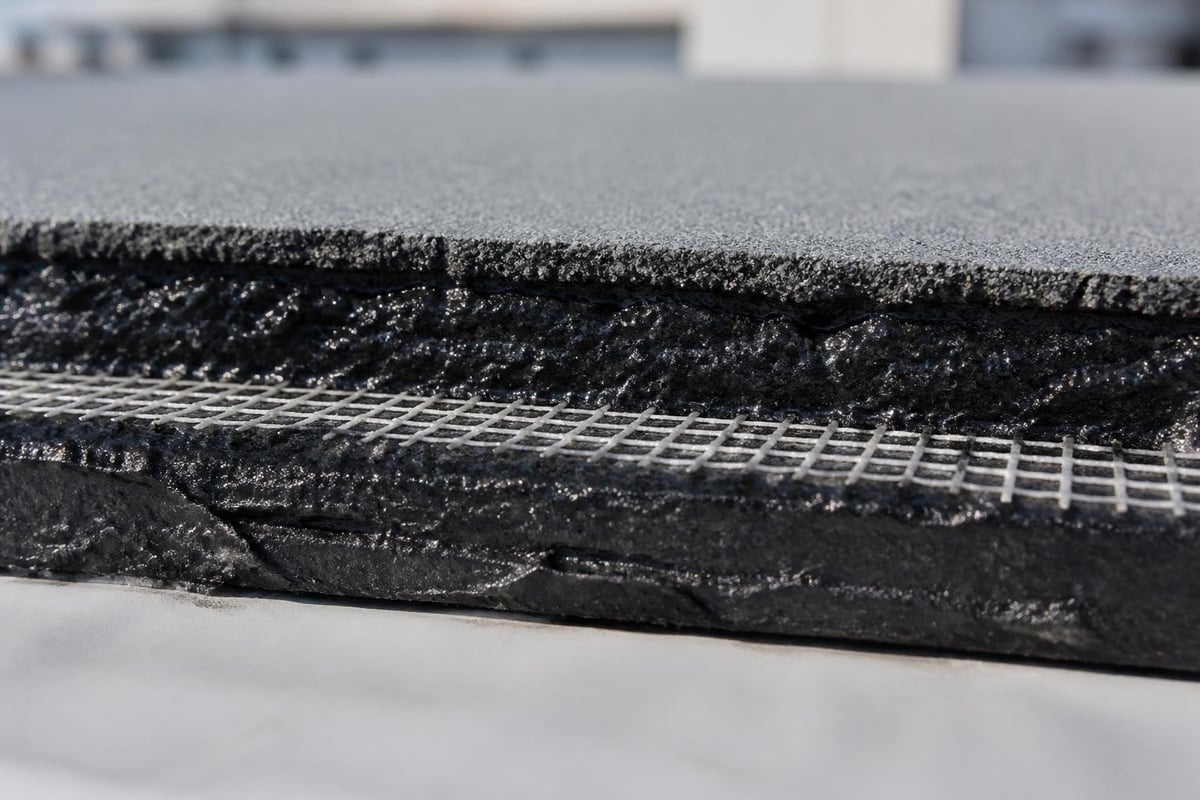
Modified bitumen represents a significant evolution in asphalt-based roofing technology. The material consists of asphalt reinforced with polymeric modifiers, typically either atactic polypropylene (APP) or styrene-butadiene-styrene (SBS). These modifiers dramatically improve the base asphalt's flexibility, temperature resistance, and overall durability.
Key characteristics of modified bitumen systems include:
- Enhanced flexibility in extreme temperatures
- Superior resistance to thermal shock
- Excellent puncture and tear resistance
- UV stability when surfaced with granules or coatings
- Multiple installation method options
The NRCA’s 2023 Roofing Manual provides comprehensive technical guidance on polymer-modified bitumen systems, outlining industry standards that professional installers follow. This resource has become the benchmark for quality installation practices nationwide.
Material Types and Composition
Modified bitumen membranes typically come in rolls that measure three feet wide and range from 60 to 120 mils thick. The reinforcement layer, usually polyester or fiberglass, provides tensile strength and dimensional stability throughout the membrane's lifespan.
| Component | Function | Common Options |
|---|---|---|
| Polymer Modifier | Temperature performance | APP or SBS |
| Reinforcement | Structural integrity | Polyester, fiberglass, or composite |
| Surfacing | UV/weather protection | Granules, mineral coating, or smooth |
| Backing | Installation compatibility | Film, sand, or self-adhesive |
Pre-Installation Assessment and Planning
Successful modified bitumen roofing installation begins long before the first membrane roll arrives on site. A thorough assessment of the existing roof structure determines substrate suitability, drainage adequacy, and any necessary repairs or modifications.
Professional installers evaluate several critical factors during the planning phase. The existing deck material must provide adequate structural support and a stable base. Wood decks may require additional preparation compared to concrete or steel deck systems. Moisture content in the substrate is equally important, as trapped moisture can compromise adhesion and lead to premature system failure.
Substrate Preparation Requirements
The substrate must be clean, dry, and structurally sound before modified bitumen roofing installation begins. Any existing roofing material being covered must be thoroughly evaluated for compatibility. Remove all loose debris, repair damaged deck areas, and ensure proper slope for water drainage.
- Inspect the deck for deterioration, rot, or structural damage
- Verify proper drainage with minimum slopes of 1/4 inch per foot
- Install edge securement and drip edges according to code requirements
- Apply base sheet or insulation if specified in the system design
- Confirm weather conditions meet manufacturer specifications for installation
Temperature and weather conditions play a crucial role in installation success. Most manufacturers specify minimum ambient temperatures and dry conditions for optimal adhesion. Los Angeles's relatively stable climate provides excellent conditions for most of the year, though early morning fog and winter rain require scheduling flexibility.
Installation Method Selection
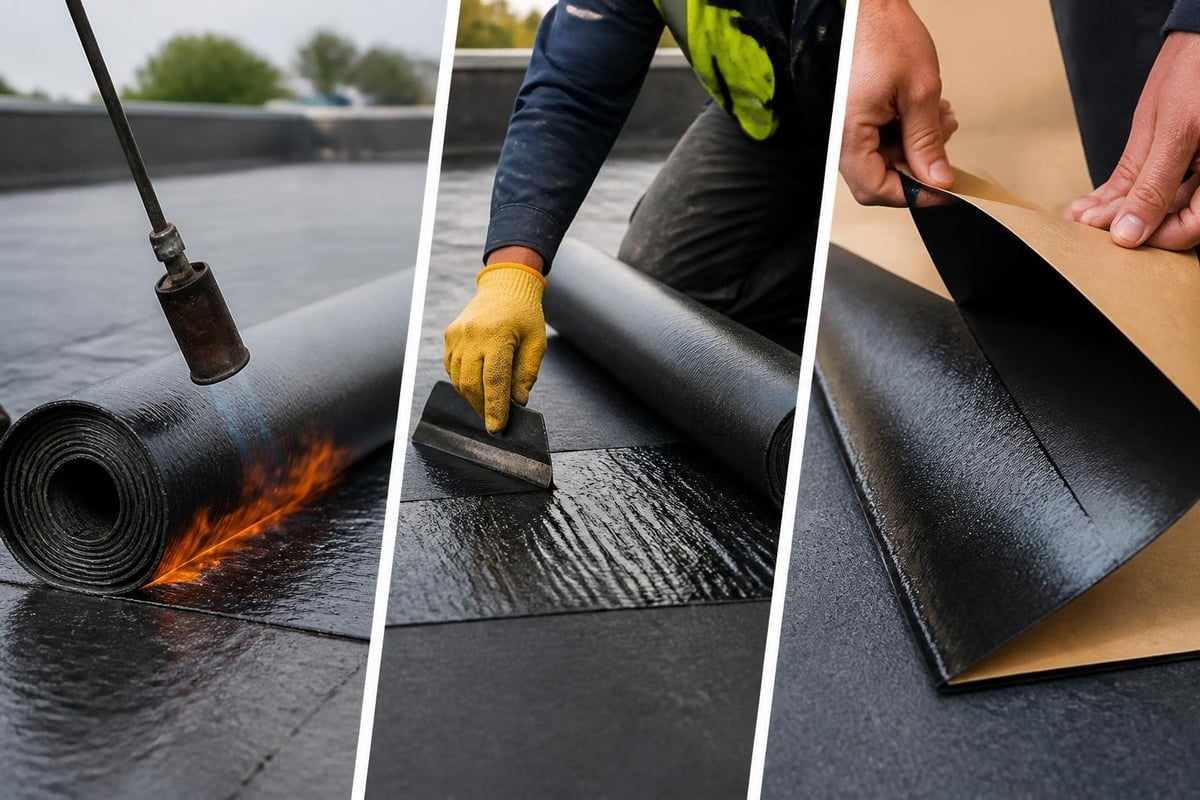
Modified bitumen roofing installation offers three primary application methods, each with distinct advantages and specific use cases. The choice depends on building type, fire ratings, substrate conditions, and local building codes.
Torch-Applied Installation
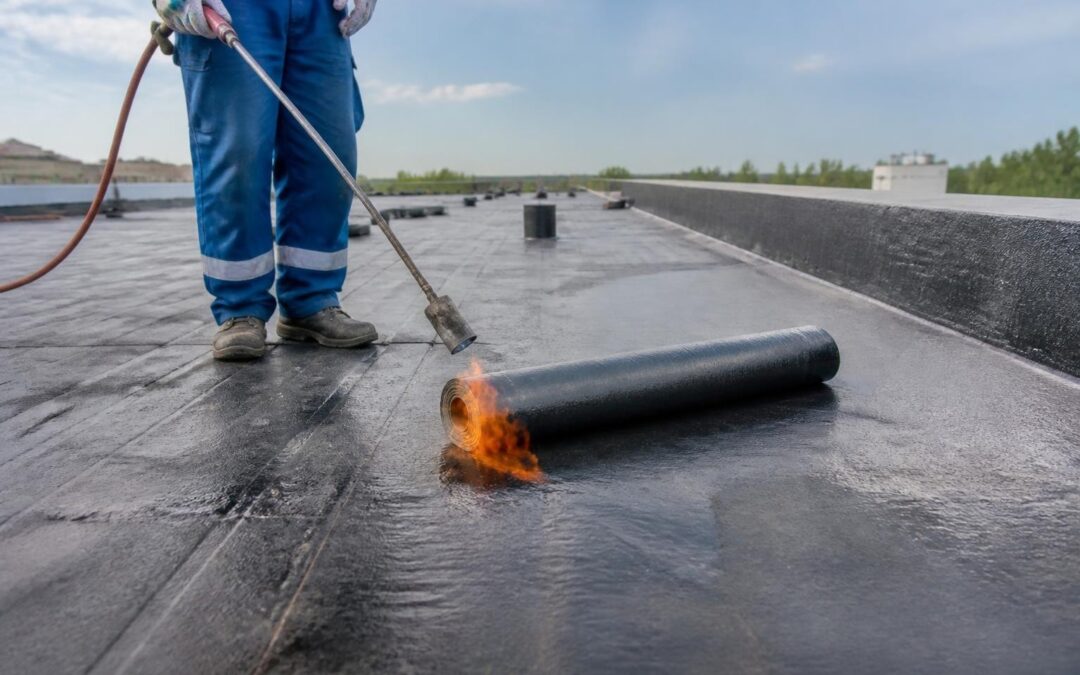
The torch-down method remains the most common approach for APP-modified bitumen. Installers use propane torches to heat the membrane backing until the asphalt becomes tacky, then immediately roll it onto the prepared substrate. This method creates a strong, fully adhered bond.
Advantages of torch application:
- Immediate adhesion verification
- Strong bond strength
- Works well in cooler temperatures
- Ideal for irregular surfaces
The NRCA ProCertified® Modified Bitumen Systems Installer program provides specialized training in safe torch application techniques. Proper training minimizes fire risk and ensures consistent quality throughout the installation process.
Cold-Applied Systems
Cold adhesives offer a flame-free alternative that addresses safety concerns on occupied buildings or structures where open flame presents unacceptable risk. These systems use specialized adhesives applied with rollers or sprayers to bond the membrane to the substrate.
Cold-applied modified bitumen roofing installation typically proceeds more slowly than torch methods but eliminates fire hazards entirely. The adhesive requires specific temperature ranges for proper curing, making application planning essential in varying weather conditions.
Self-Adhered Membranes
Self-adhered modified bitumen membranes feature factory-applied adhesive protected by a release film. Installers simply remove the backing and press the membrane into place, creating a strong bond without heat or additional adhesive.
| Installation Method | Substrate Temperature | Skill Level | Fire Risk | Typical Application |
|---|---|---|---|---|
| Torch-applied | 40°F minimum | Advanced | Moderate to high | Commercial low-slope |
| Cold adhesive | 50°F minimum | Intermediate | None | Occupied buildings |
| Self-adhered | 40°F minimum | Intermediate | None | Residential/small commercial |
Technical guidance from the Asphalt Roofing Manufacturers Association covers application methods in detail, including substrate recommendations and system compatibility considerations.
Step-by-Step Installation Process
The actual modified bitumen roofing installation follows a systematic sequence regardless of application method. Precision and attention to detail at each stage determine long-term system performance and weather resistance.
Base Layer Application
Begin installation at the lowest point of the roof to ensure proper water shedding. The base sheet or ply serves as the foundation for the entire system. For fully adhered systems, this layer bonds directly to the prepared substrate using the chosen application method.
Proper overlap is critical at this stage. Side laps typically require three inches minimum, while end laps need six inches. These overlaps create redundant waterproofing and compensate for thermal movement over the roof's lifespan.
Intermediate and Cap Sheet Installation
Multi-ply systems include intermediate layers that add thickness and improve puncture resistance. Each successive layer follows the same careful overlap requirements, with seams offset from lower layers to prevent water infiltration paths.
The cap sheet represents the weathering surface and requires the most careful installation. Granule-surfaced cap sheets provide UV protection and enhance fire resistance. Smooth-surface cap sheets typically receive reflective coatings after installation to meet energy codes and improve thermal performance.
Critical installation checkpoints:
- Maintain consistent overlap dimensions throughout
- Verify complete adhesion at all seams and edges
- Inspect for fishmouths, wrinkles, or bridging
- Ensure proper termination at all penetrations
- Install flashing details according to specifications
Flashing and Detail Work
The most vulnerable areas of any roofing system occur at transitions, penetrations, and terminations. Modified bitumen roofing installation demands meticulous attention to these details, as they represent the most common points of water infiltration.
Penetration Flashing
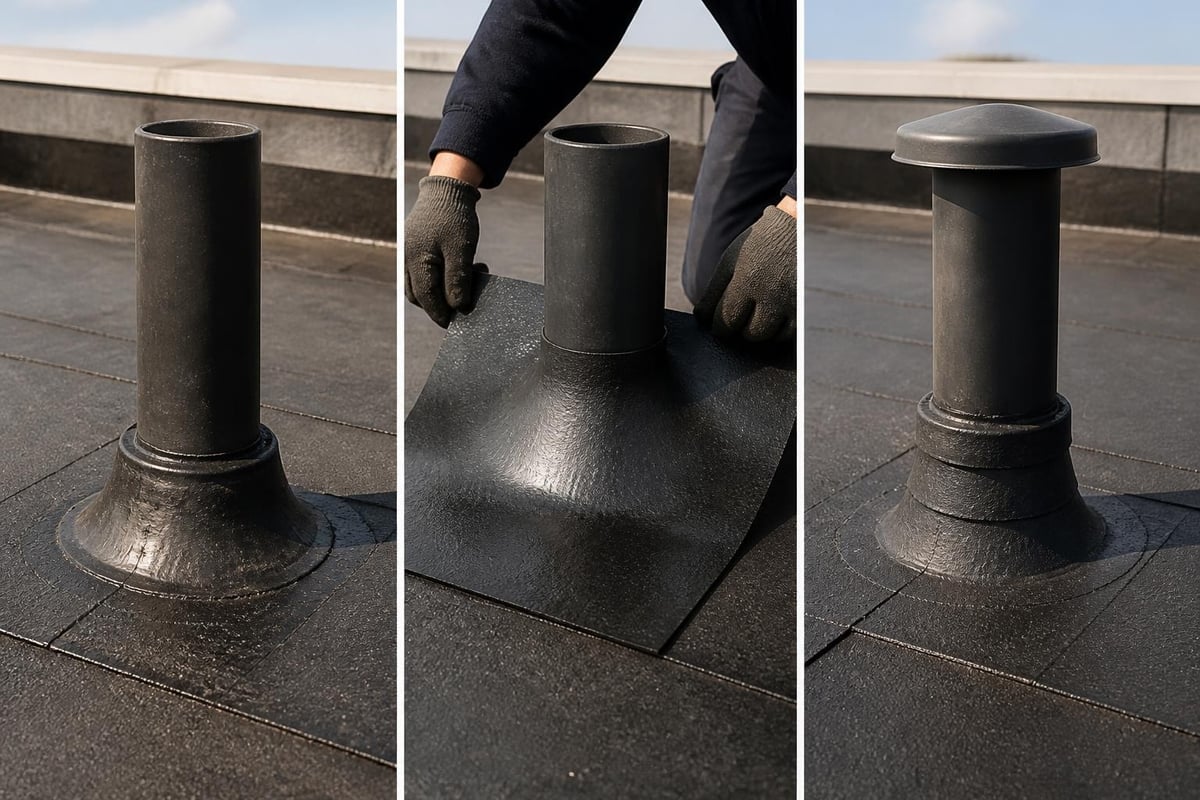
Pipes, vents, and equipment supports require custom flashing details that maintain system integrity. Base flashing wraps the penetration, extending onto the field membrane with adequate overlap. Cap flashing sheds water away from the vertical surface and protects the base flashing from UV exposure.
For larger penetrations like HVAC units, pitch pans or curb-mounted flashing systems provide reliable weatherproofing. These details must accommodate thermal movement without breaking the waterproof seal.
Wall and Parapet Terminations
Vertical terminations present unique challenges in modified bitumen roofing installation. The membrane must transition from horizontal to vertical surfaces while maintaining complete adhesion and weather resistance. Base flashing extends up the wall surface at least eight inches above the finished roof level.
Metal counterflashing protects the top edge of the membrane flashing and creates a two-stage weatherproofing system. This detail prevents wind-driven rain from working behind the membrane while allowing for normal building movement.
- Install cant strips at inside corners to eliminate sharp angles
- Apply base flashing with proper overlap onto field membrane
- Secure top edge according to substrate type and building code
- Install counterflashing with proper laps and sealant
- Verify all fasteners penetrate secure substrate
When property owners invest in New Roof Installation projects, these critical flashing details make the difference between a roof that performs reliably for decades and one that develops leaks within years. Professional contractors understand that rushing detail work undermines even the highest-quality membrane installation.
Quality Control and Performance Optimization
Professional modified bitumen roofing installation includes systematic quality control throughout the process. Regular inspections catch installation errors before they compromise system performance or void manufacturer warranties.
Inspection Protocols
Daily inspections verify proper adhesion, overlap dimensions, and detail execution. Experienced installers check for common defects including inadequate torching that leaves unbonded areas, excessive heat that damages the membrane, or poor seam alignment that creates water infiltration paths.
Third-party inspections provide additional quality assurance for critical projects. These independent evaluations document installation compliance with manufacturer specifications and building codes, supporting warranty activation and long-term performance expectations.
Energy Efficiency and Cool Roof Options
California's Title 24 energy code increasingly drives cool roof requirements for commercial buildings. Modified bitumen systems can meet these standards through reflective cap sheets or post-installation coatings that reduce heat absorption.
The U.S. EPA’s guidance on cool roofs explains how reflective roofing materials reduce urban heat island effects while lowering building cooling costs. White or light-colored granule surfacing provides inherent reflectivity, while specialized coatings can boost performance of darker cap sheets.
Cool roof strategies for modified bitumen:
- Factory-applied reflective granules on cap sheets
- White or light-colored mineral surfacing
- Elastomeric reflective coatings applied post-installation
- Aluminum or reflective coating renewal over aged systems
Research from Lawrence Berkeley National Laboratory on roofing material weathering demonstrates that proper coating selection and maintenance preserve reflectivity over time. Their accelerated aging studies help predict long-term performance in real-world conditions.
Maintenance and Long-Term Performance
While modified bitumen roofing installation creates durable, weather-resistant systems, proactive maintenance extends service life and protects the investment. Regular inspections identify minor issues before they become major problems requiring extensive repairs.
Recommended Maintenance Schedule
Schedule biannual inspections in spring and fall to assess system condition and clear drainage paths. Remove debris from roof surfaces and drains, as standing water accelerates membrane deterioration even on properly sloped roofs. Los Angeles's dry climate reduces biological growth concerns, but dust and smog deposits still require periodic cleaning.
Inspect flashing details and penetrations carefully during each maintenance visit. These high-stress areas show wear first and benefit from early intervention. Minor repairs using compatible patching materials prevent water infiltration that could compromise the entire system.
| Maintenance Task | Frequency | Purpose |
|---|---|---|
| Visual inspection | Biannual | Identify damage or wear |
| Drain cleaning | Quarterly | Prevent water ponding |
| Debris removal | As needed | Protect membrane surface |
| Reflective coating renewal | Every 5-10 years | Maintain energy performance |
| Professional assessment | Annual | Document condition, plan repairs |
Installation Challenges and Solutions
Even experienced contractors encounter challenges during modified bitumen roofing installation. Understanding common issues and proven solutions ensures successful project outcomes regardless of site-specific complications.
Temperature Extremes
While Los Angeles enjoys moderate temperatures most of the year, early morning installations may face temperatures below optimal ranges for cold adhesives or self-adhered systems. Torch-applied methods offer more flexibility in cooler conditions but require additional safety precautions.
Summer heat presents opposite challenges. Excessive substrate temperatures can cause membranes to become too soft for proper installation, leading to wrinkles or distortion. Early morning installation windows or temporary shading help manage these conditions.
Substrate Irregularities
Uneven substrates create bonding challenges and potential weak points in the finished system. Proper preparation addresses most irregularities, but severely damaged decks may require overlay boards or complete deck replacement before modified bitumen roofing installation proceeds.
Wood decks with varying moisture content can telegraph through thin membranes, creating aesthetic concerns. Base sheets or insulation layers smooth these variations while adding thermal performance and additional waterproofing redundancy.
Wind and Weather Delays
Unexpected weather can disrupt installation schedules, particularly for multi-day projects. Proper planning includes temporary weatherproofing strategies that protect partially completed work. Self-adhered base sheets provide immediate weather protection while contractors wait for conditions suitable for cap sheet installation.
Warranty Considerations and Documentation
Manufacturer warranties for modified bitumen systems typically range from 10 to 30 years, depending on system configuration and installation quality. Activating these warranties requires careful documentation of materials, installation methods, and installer qualifications.
Most manufacturers require approved contractors who demonstrate proper training and certification. They may also mandate specific base sheet products, minimum membrane thickness, or particular flashing details. Non-compliance with these requirements can void warranty coverage entirely.
Essential warranty documentation includes:
- Material purchase receipts and batch numbers
- Installer certification credentials
- Installation photographs showing critical details
- Third-party inspection reports if applicable
- Completed warranty registration within specified timeframes
Proper installation documentation protects property owners' investments and provides valuable information for future maintenance or repair contractors. Digital photo archives prove particularly useful when evaluating system performance years after installation.
Modified bitumen roofing installation delivers proven performance through careful material selection, proper application techniques, and attention to critical details. Whether you're planning a new commercial building or replacing an aging roof system, understanding these installation principles helps ensure successful outcomes. Proof Your Roof brings decades of expertise in modified bitumen and other roofing systems to Los Angeles area property owners, combining technical knowledge with quality workmanship to protect your investment for years to come.