
Natural light transforms living spaces, and skylights offer one of the most effective ways to bring sunshine into your home. However, understanding the cost of skylight installation requires looking beyond the sticker price of the unit itself. From material selection and labor complexity to roof preparation and energy-performance features, numerous factors influence the total investment. For homeowners in Los Angeles and surrounding areas, where sunshine is abundant year-round, skylights can reduce electricity costs while creating brighter, more inviting interiors. This comprehensive guide breaks down every cost component so you can budget accurately and make informed decisions about your skylight project.
Understanding Base Skylight Costs
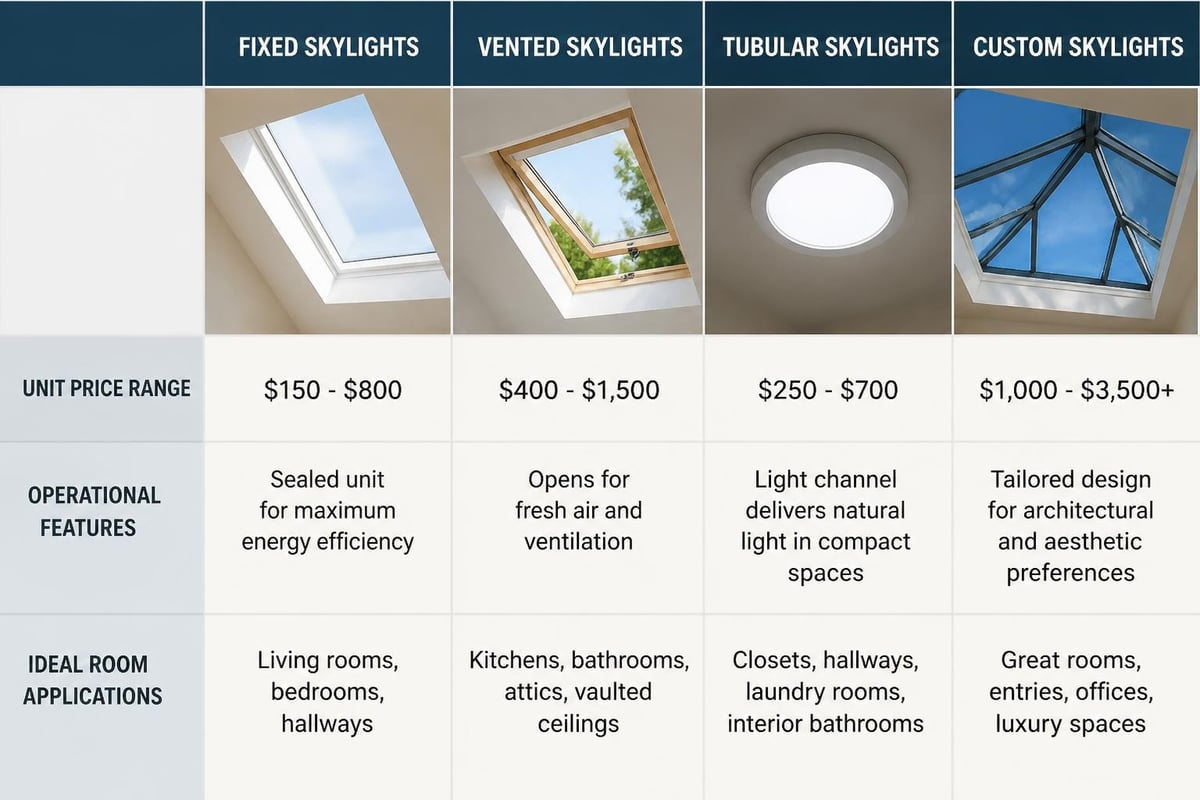
The cost of skylight installation begins with the skylight unit itself, which varies dramatically based on type, size, and features. Fixed skylights typically range from $300 to $1,200 for the unit alone, making them the most budget-friendly option. These non-opening models simply allow light to enter without ventilation capabilities.
Vented skylights command higher prices, usually between $500 and $2,500, because they include operational mechanisms that allow fresh air circulation. Manual vented models sit at the lower end of this range, while electric and solar-powered options with rain sensors push costs higher.
Skylight Types and Price Ranges
Tubular skylights represent an increasingly popular middle-ground option, with units priced between $200 and $600. These compact systems work exceptionally well in smaller rooms, hallways, and closets where traditional skylights cannot fit.
Premium skylight categories include:
- Custom-sized units: $1,500 to $4,000
- Curved or dome skylights: $800 to $3,000
- Smart skylights with automation: $1,200 to $4,500
- Solar-powered vented models: $1,000 to $3,500
| Skylight Type | Unit Cost Range | Best Application |
|---|---|---|
| Fixed | $300 – $1,200 | Living rooms, dining areas |
| Manual vented | $500 – $1,500 | Kitchens, bathrooms |
| Electric vented | $1,200 – $2,500 | Master suites, lofts |
| Tubular | $200 – $600 | Hallways, closets, small baths |
| Custom | $1,500 – $4,000 | Unique architectural needs |
Material quality significantly impacts both initial costs and long-term performance. Vinyl-framed skylights offer the lowest entry point but may not suit high-end homes. Aluminum frames provide better durability at moderate prices, while wood and copper-clad options deliver premium aesthetics with corresponding price tags.
Labor and Installation Expenses
Professional installation represents a substantial portion of the total cost of skylight installation. Labor rates in Los Angeles typically range from $500 to $2,500, depending on project complexity and roof accessibility. A straightforward installation on a simple asphalt shingle roof costs considerably less than cutting through tile, slate, or metal roofing materials.
Roof pitch dramatically affects labor hours and safety requirements. Steep roofs demand additional safety equipment, scaffolding, or specialized access systems that increase costs. Contractors may charge premium rates for pitches exceeding 6:12, where working conditions become more challenging.
The installation process involves multiple steps that contribute to labor costs:
- Measuring and marking the precise skylight location
- Creating the roof opening and cutting through decking
- Framing the light shaft between roof and ceiling
- Installing flashing systems to ensure waterproof seals
- Mounting the skylight unit and securing all fasteners
- Finishing interior surfaces around the light shaft
- Painting or trimming to match existing décor
Complexity Factors That Increase Labor Costs
Cathedral ceilings require minimal light shaft construction, potentially reducing labor by 20 to 30 percent compared to flat ceilings. When ceiling and roof planes don't align, contractors must build angled light shafts, adding $400 to $1,200 in framing and drywall expenses.
Additional labor considerations include:
- Relocating or reinforcing roof trusses: $500 to $1,500
- Installing multiple skylights simultaneously: 15% discount per additional unit
- Weekend or emergency installation: 25% to 50% premium
- Historic home preservation requirements: $300 to $1,000 extra
Experienced roofing professionals understand how to integrate skylights without compromising structural integrity or weather protection. When you're already planning Roof Replacement, coordinating skylight installation simultaneously can reduce overall costs by eliminating duplicate mobilization, scaffolding setup, and roof access expenses.
Roof Preparation and Structural Requirements
The condition and type of your existing roof significantly influence the cost of skylight installation. Roofs requiring repairs, reinforcement, or specialized waterproofing add hundreds to thousands of dollars to project totals. This Old House provides detailed guidance on how different roof types affect installation complexity and pricing.
Structural support requirements vary based on skylight size and roof design. Larger units weighing 50 pounds or more may require additional framing members to transfer loads properly. Your contractor must ensure adequate support around the opening to prevent sagging or stress concentration.
| Roof Type | Installation Complexity | Additional Cost Factor |
|---|---|---|
| Asphalt shingle | Low | Baseline |
| Wood shake | Medium | +$200 to $500 |
| Clay tile | High | +$400 to $800 |
| Slate | Very high | +$600 to $1,200 |
| Metal standing seam | Medium-high | +$300 to $700 |
Flashing and Waterproofing Systems
Professional-grade flashing represents one of the most critical cost components for long-term skylight performance. Quality flashing kits range from $50 to $300, with curb-mounted systems typically costing more than deck-mounted options. The Building America Solution Center emphasizes that proper flashing installation prevents 95 percent of skylight leak issues.
Ice and water shield membranes add $75 to $200 but provide essential protection in areas prone to ice damming or heavy rain. Los Angeles may not face ice concerns, but intensive winter storms make secondary moisture barriers worthwhile investments.
Manufacturers often require specific flashing kits designed for their skylight models. Using non-approved alternatives typically voids warranties, making genuine components worth the premium. Generic flashing kits save $50 to $100 initially but risk long-term performance issues.
Permits, Inspections, and Code Compliance
Building permits add $150 to $500 to the cost of skylight installation, depending on local jurisdiction requirements and project scope. Los Angeles building departments require permits for most skylight installations, particularly when structural modifications occur or electrical work connects to vented models.
Permit fees fund plan reviews and inspections that ensure code compliance. Energy codes increasingly regulate skylight specifications, requiring specific U-factors, Solar Heat Gain Coefficients (SHGC), and visible transmittance values. ENERGY STAR certification helps identify products meeting regional performance requirements.
Typical permit and inspection costs include:
- Building permit application: $100 to $300
- Electrical permit (vented models): $50 to $150
- Structural plan review: $75 to $200
- Final inspection fee: $50 to $100
ASHRAE standards influence maximum allowable skylight areas and mandate certain control features for larger installations. ASHRAE Standard 90.1 provides technical guidance that professional contractors follow to ensure energy-efficient designs. While these requirements add upfront costs, they prevent excessive cooling loads that would increase long-term operating expenses.
Energy Performance and Glazing Options
Glazing technology significantly impacts both the cost of skylight installation and ongoing energy expenses. Single-pane skylights cost $100 to $300 less than double-pane units but lose heat rapidly during winter and allow excessive solar gain during summer. For Los Angeles climates, the cooling load penalties of single glazing typically outweigh any initial savings.
Double-pane skylights with low-E coatings represent the current industry standard, balancing performance and affordability. These units cost $400 to $1,500, depending on size and frame quality. Low-emissivity coatings reflect infrared heat while allowing visible light transmission, reducing cooling costs by 15 to 30 percent.
Advanced Glazing Technologies
Triple-pane skylights deliver superior insulation but add $300 to $800 compared to double-pane alternatives. These units make sense in extreme climates but provide diminishing returns in moderate regions like Southern California.
Performance ratings to consider:
- U-factor: Lower values indicate better insulation (target 0.30 or less)
- Solar Heat Gain Coefficient: Lower values reduce cooling loads (0.25 to 0.35 ideal for LA)
- Visible Transmittance: Higher values allow more natural light (0.40 to 0.60 optimal)
The National Fenestration Rating Council provides standardized ratings that allow accurate comparisons between products. NFRC labels display all performance metrics in consistent formats, helping homeowners identify units that balance daylighting goals with energy efficiency.
Tinted and reflective coatings add $100 to $400 but reduce glare and heat gain in south-facing applications. Impact-resistant glazing costs $200 to $600 more but provides security benefits and may reduce insurance premiums in some areas.
Additional Features and Accessories
Modern skylights offer numerous features that enhance functionality while increasing the cost of skylight installation. Blinds and shades provide light control and privacy, with manual systems adding $100 to $300 and motorized options ranging from $300 to $800 per unit.
Rain sensors automatically close vented skylights when precipitation begins, protecting interiors from water damage. These sensors add $150 to $400 but prove invaluable for homeowners who travel frequently or forget to close skylights before leaving.
| Feature | Cost Range | Primary Benefit |
|---|---|---|
| Manual blinds | $100 – $300 | Light control, privacy |
| Motorized blinds | $300 – $800 | Convenience, automation |
| Rain sensors | $150 – $400 | Automatic weather protection |
| Solar panels (self-powered) | $200 – $600 | Off-grid operation |
| Smartphone controls | $100 – $300 | Remote operation |
| Daylight sensors | $150 – $350 | Automated artificial light dimming |
Solar-powered venting eliminates electrical wiring requirements, reducing installation complexity and costs while providing sustainable operation. These systems include integrated panels that charge batteries, enabling ventilation without grid connection.
Smart home integration allows skylights to connect with whole-home automation platforms. While adding $200 to $500 in equipment costs, these systems enable sophisticated control schedules and integration with weather forecasts, HVAC systems, and security platforms.
Regional Cost Variations and Market Factors
Geographic location substantially affects the cost of skylight installation through labor rates, material availability, and local building requirements. Los Angeles pricing typically runs 10 to 25 percent higher than national averages due to elevated labor costs and stricter seismic and energy codes.
Competition among roofing contractors influences pricing dynamics. Markets with numerous qualified installers see lower prices than areas with limited professionals. Obtaining three to five detailed quotes helps establish fair market rates and identifies outliers.
Seasonal Pricing Considerations
Installation timing affects both availability and pricing. Spring and fall represent peak roofing seasons, when contractors command premium rates and schedule weeks or months in advance. Winter installations may offer 10 to 20 percent discounts, though weather delays become more likely.
Summer presents moderate pricing with good availability in most markets. However, Los Angeles contractors stay busy year-round due to favorable weather, minimizing seasonal price variations compared to regions with harsh winters.
Material supply chains occasionally experience disruptions that temporarily inflate costs. The 2025-2026 period saw improved supply stability compared to previous years, but custom sizes and premium materials may still face longer lead times.
Financing Options and Tax Incentives
Several financing mechanisms help manage the cost of skylight installation. Home equity lines of credit typically offer the lowest interest rates, ranging from 6 to 9 percent in 2026. Personal loans provide faster approval but charge 8 to 15 percent interest, depending on credit scores.
Manufacturer financing programs occasionally offer promotional zero-percent interest for 12 to 24 months. These deals require strong credit but eliminate interest charges when paid within promotional periods.
Federal tax credits significantly offset skylight expenses for qualifying products. The Energy Efficient Home Improvement Credit allows credits up to 30 percent of costs for ENERGY STAR certified skylights, subject to annual maximums and specific performance criteria.
Key tax credit requirements:
- Skylight must meet ENERGY STAR Most Efficient certification
- Installation must occur in taxpayer's primary residence
- Credit applies to both product and installation labor
- Annual credit cap of $1,200 for windows, doors, and skylights combined
- Lifetime credit limit of $3,200 through 2032
State and local utility rebate programs may provide additional incentives. While California's statewide rebates have evolved, some municipal utilities offer modest incentives for daylighting improvements that reduce electrical lighting loads.
Long-Term Value and Return on Investment
Beyond the immediate cost of skylight installation, homeowners should evaluate long-term financial impacts. Quality skylights reduce artificial lighting needs during daylight hours, cutting electricity consumption by 5 to 15 percent in well-designed installations. The Department of Energy explains how strategic daylighting creates energy savings while improving occupant comfort and productivity.
Property value increases represent another consideration. Real estate professionals estimate that professionally installed skylights add $1,000 to $2,500 to home values, though actual returns vary by market and home type. Buyers particularly value skylights in kitchens, master bathrooms, and living areas.
Maintenance costs remain relatively low for quality installations. Annual inspections cost $100 to $200 and identify minor issues before they escalate. Flashing repairs average $200 to $500, while complete skylight replacement becomes necessary after 20 to 30 years.
Calculating Total Cost of Ownership
Total cost of ownership includes initial installation, ongoing energy savings, maintenance expenses, and eventual replacement. A $2,500 skylight installation might deliver $75 annual energy savings, require $150 in maintenance every five years, and last 25 years before replacement.
Life-cycle cost analysis reveals that premium skylights with superior energy performance often prove more economical than budget options despite higher initial prices. A $1,800 high-performance skylight saving $100 annually outperforms a $1,200 standard unit saving $50 annually within the typical ownership period.
Insurance implications deserve consideration as well. Properly installed skylights rarely affect homeowners insurance premiums negatively. Impact-resistant models may qualify for modest discounts in wind-prone areas, though Los Angeles typically sees minimal insurance impacts.
Selecting the Right Contractor
Contractor selection profoundly influences both the cost of skylight installation and project outcomes. Licensed roofing contractors with specific skylight experience deliver superior results compared to general handymen or unlicensed installers. California requires contractors performing work exceeding $500 to hold active licenses.
Essential contractor qualifications include:
- Active California contractor's license (C-39 for roofing)
- Current general liability and workers' compensation insurance
- Manufacturer certifications for specific skylight brands
- References from recent skylight installations
- Written warranties covering both labor and materials
Warranty terms vary significantly between contractors. Standard labor warranties range from one to five years, while comprehensive providers offer ten-year coverage. Manufacturer product warranties typically span 10 to 20 years for skylight units and 10 years for flashing kits.
Detailed written estimates prevent misunderstandings and scope creep. Comprehensive quotes itemize all costs including materials, labor, permits, disposal fees, and potential contingencies. Vague estimates or verbal agreements create disputes when unexpected issues arise.
Payment schedules should align with project milestones rather than requiring full payment upfront. Typical terms include a 20 to 30 percent deposit, 50 percent upon material delivery, and final payment after satisfactory completion and inspection.
Common Cost-Saving Strategies
Strategic planning reduces the cost of skylight installation without sacrificing quality. Installing multiple skylights during a single project captures economies of scale, with contractors typically discounting 10 to 20 percent per additional unit after the first.
Coordinating skylight installation with planned roof replacement eliminates duplicate costs for scaffolding, access, and temporary weather protection. This synergy can reduce combined project costs by $500 to $1,500 compared to separate installations.
Additional cost-reduction approaches:
- Selecting standard sizes over custom dimensions saves $300 to $1,000
- Choosing deck-mount over curb-mount models reduces complexity
- Installing during contractor off-peak seasons captures discounts
- Handling interior finishing work yourself cuts $200 to $600
- Purchasing skylights directly during manufacturer sales events
Material selection offers significant savings opportunities. Mid-range skylights from reputable manufacturers often perform 90 percent as well as premium models at 60 percent of the cost. The marginal performance gain from ultra-premium units rarely justifies doubling expenses.
DIY installation tempts some homeowners but carries substantial risks. Improper flashing causes leaks that damage ceilings, insulation, and structural members. Repair costs for failed DIY installations frequently exceed professional installation prices. Unless you possess specific roofing expertise, professional installation proves more economical.
Understanding the cost of skylight installation empowers homeowners to budget accurately and select options that balance performance, aesthetics, and affordability. From unit selection and labor complexity to permits and energy features, each component contributes to total project investment. Whether you're adding natural light to a single room or incorporating multiple skylights throughout your home, Proof Your Roof brings decades of roofing expertise to Los Angeles and surrounding communities, ensuring your skylight installation delivers lasting value, superior weather protection, and the bright, inviting spaces you envision.