

Your home's gutter system performs a critical role in protecting your property from water damage, yet it remains one of the most overlooked components of residential maintenance. A thorough gutter inspection helps identify potential issues before they escalate into costly repairs affecting your roof, foundation, and exterior walls. For Los Angeles homeowners dealing with seasonal rains and debris from surrounding vegetation, understanding how to properly assess your gutter system can save thousands of dollars in preventable damage. This comprehensive guide explores the essential aspects of gutter evaluation, from visual assessments to functional testing, helping you maintain a robust drainage system year-round.
Understanding the Purpose of Regular Gutter Assessments
Gutters serve as your home's primary defense against water infiltration, channeling thousands of gallons away from vulnerable areas during rainstorms. Without proper evaluation and maintenance, these systems fail silently until visible damage appears.
A comprehensive gutter inspection protects multiple areas of your property:
- Foundation integrity by preventing soil erosion and basement flooding
- Roof structure by eliminating standing water and ice dam formation
- Exterior siding by redirecting water away from walls
- Landscaping by controlling water flow patterns
- Interior walls by preventing moisture penetration
According to InterNACHI’s professional inspection standards, proper gutter sizing and condition assessment form essential components of home maintenance protocols. The inspection process evaluates both visible components and functional performance under various conditions.
Los Angeles properties face unique challenges including extended dry periods followed by intense rainfall, making seasonal evaluations particularly important. Clay tile roofs common in Southern California architecture require special attention to gutter capacity and fastener integrity.
Visual Inspection Techniques for Homeowners
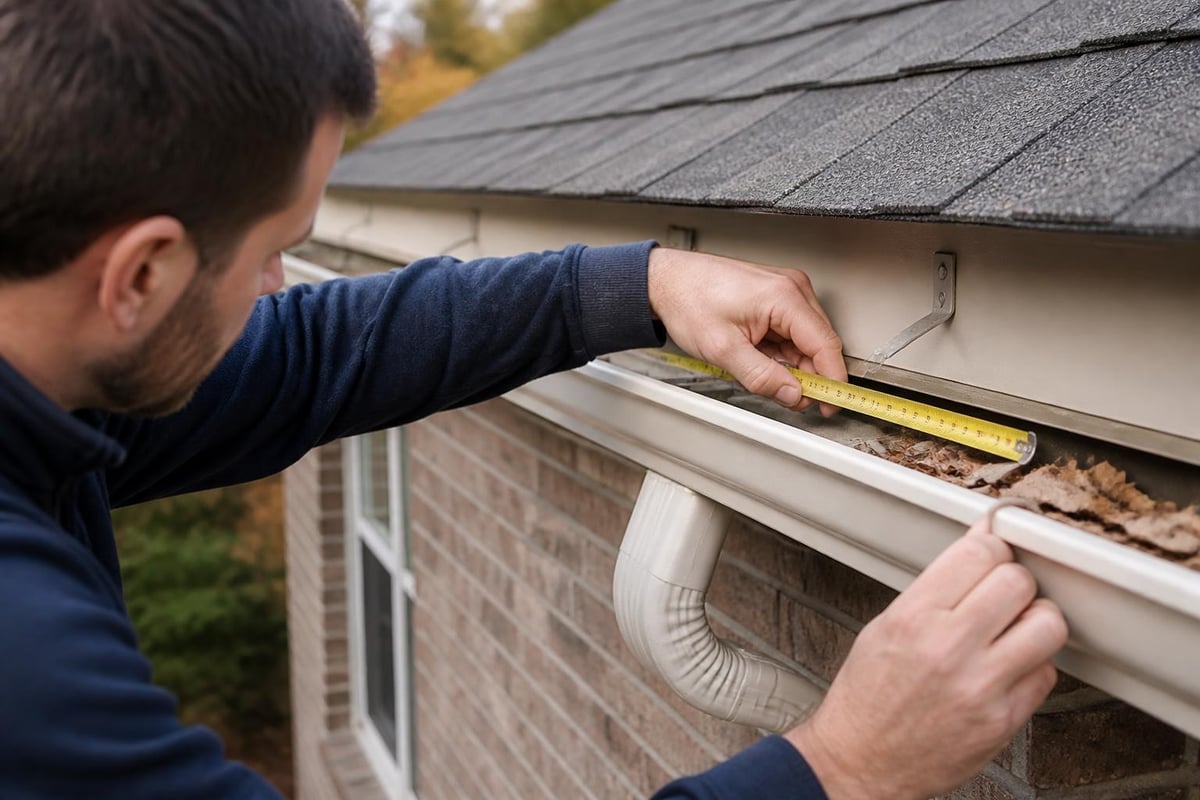
Beginning with ground-level observations, homeowners can identify numerous warning signs without climbing ladders. Walk your property's perimeter during and after rainfall to observe water flow patterns and overflow conditions.
External Warning Signs
Standing water near your foundation indicates inadequate drainage or clogged downspouts. Staining on exterior walls below the roofline suggests gutter overflow or leakage. Sagging sections visible from ground level reveal structural weakness or improper fastening.
Peeling paint on fascia boards typically indicates chronic moisture exposure from failing gutters. These visual cues provide valuable information before conducting closer examinations.
Close-Range Assessment Methods
Safety represents the paramount concern when conducting elevated inspections. Use stable ladders positioned on level ground, following manufacturer guidelines for angle and extension height. Work during daylight hours with clear weather conditions.
| Inspection Area | What to Check | Warning Signs |
|---|---|---|
| Gutter Troughs | Interior surface condition | Rust, holes, cracks, separation |
| Seams and Joints | Connection integrity | Gaps, water stains, loose fasteners |
| Hangers and Spikes | Attachment security | Loose hardware, wood damage, spacing issues |
| Pitch and Slope | Water flow direction | Standing water, reverse slope, uneven sections |
Examine the interior surfaces for accumulated debris, rust formation, and structural deterioration. Pine needles, leaves, and granules from asphalt shingles commonly accumulate in Los Angeles area gutters.
Test hangers by applying gentle pressure to verify secure fastening. Spacing exceeding 24 inches between supports often leads to sagging and improper pitch.
Functional Testing Procedures
Visual assessment reveals static conditions, but functional testing evaluates performance under operating conditions. These procedures simulate rainfall to identify drainage deficiencies and overflow points.
Water Flow Testing
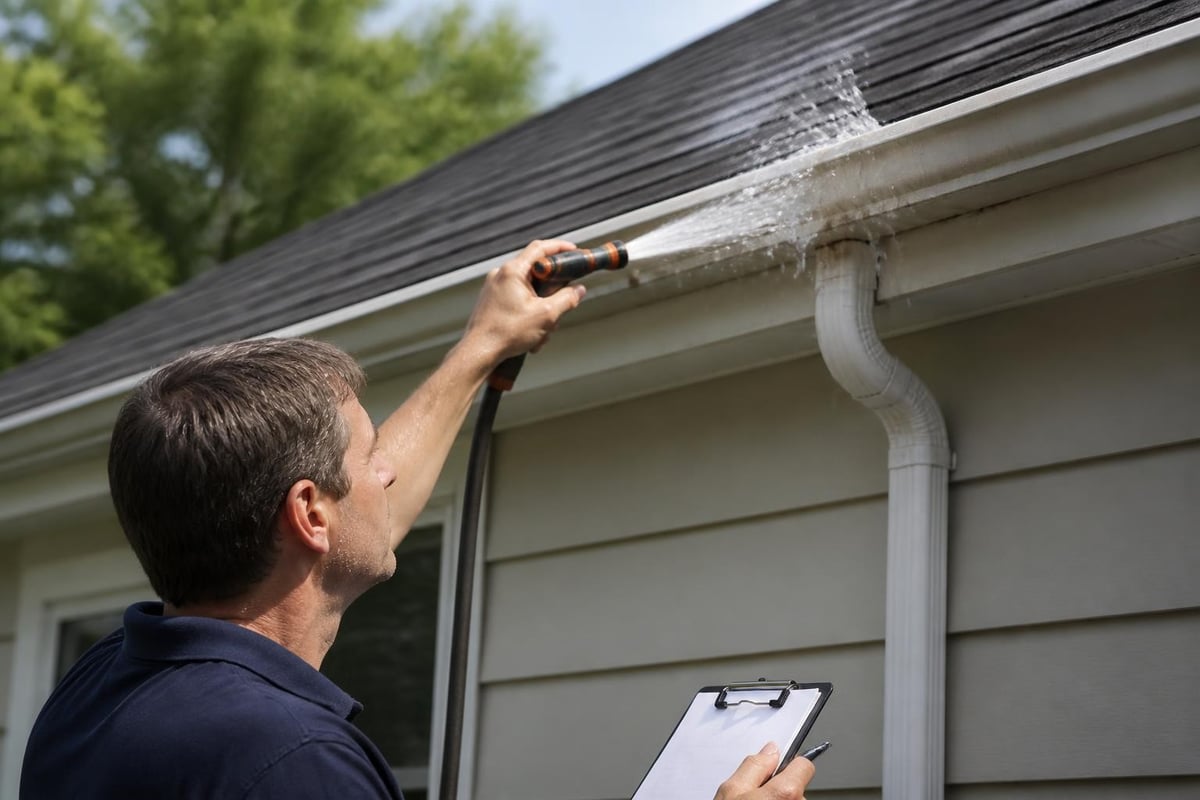
Pour several gallons of water into gutters at various points along their length. Observe flow speed, direction, and exit velocity at downspouts. Water should move smoothly toward downspouts without pooling or hesitation.
Measure flow time from the farthest point to downspout discharge. Sluggish movement indicates insufficient pitch or partial blockages. Proper gutter maintenance practices emphasize the importance of maintaining correct slope throughout the system.
Optimal pitch specifications:
- Minimum slope of 1/4 inch per 10 feet of gutter length
- Maximum slope of 1/2 inch per 10 feet to prevent excessive velocity
- Consistent gradient without dips or reverse slopes
- Smooth transitions at corners and connection points
Downspout Performance Evaluation
Downspouts require separate assessment beyond gutter troughs. Pour water directly into downspout openings while observing discharge points at ground level. Proper function delivers concentrated flow away from the foundation.
Underground drainage systems need verification through discharge observation during testing. Blocked underground pipes often reveal themselves through slow drainage or backup into gutters.
Seasonal Inspection Requirements for Los Angeles Climate
Southern California's Mediterranean climate presents distinct seasonal challenges requiring adapted inspection schedules. Unlike regions with consistent precipitation, Los Angeles experiences concentrated rainfall during winter months preceded by extended dry periods.
Fall Preparation Inspections
September through November demands thorough evaluation before winter rains arrive. Debris accumulation during dry months creates blockage risks when precipitation begins. Native California vegetation including eucalyptus, oak, and sycamore trees shed substantial leaf matter during fall transitions.
Remove all organic material and test flow capacity before seasonal rains commence. This proactive approach prevents overflow damage during first significant storm events.
Post-Storm Assessments
Following major rainfall events, conduct brief evaluations focusing on overflow evidence and structural integrity. Los Angeles occasionally experiences intense storms delivering several inches of precipitation within hours, stressing gutter systems beyond normal capacity.
Check for newly loosened fasteners, separated seams, or damaged sections resulting from heavy water volume. Regular gutter inspections and maintenance prove essential for preventing progressive deterioration.
Summer Monitoring
Even during dry months, quarterly visual checks identify developing issues before rainy season returns. UV exposure degrades materials over time, particularly affecting plastic components and sealants. Summer inspections allow convenient scheduling for repairs without weather constraints.
Common Issues Discovered During Professional Inspections
Experienced technicians consistently encounter specific problems across residential properties. Understanding these common failures helps homeowners recognize similar conditions during personal assessments.
Frequent gutter system failures include:
- Improper pitch: Sections installed level or sloping backward cause standing water
- Inadequate capacity: Undersized gutters overflow during moderate rainfall
- Corroded fasteners: Rusted spikes and hangers lose holding strength
- Separated seams: Thermal expansion and age cause joint failures
- Damaged end caps: Deteriorated closures allow water escape
- Clogged outlets: Downspout connections blocked by debris accumulation
Many Los Angeles homes feature asphalt shingles roofs that shed granules over time, creating additional debris requiring removal during inspections. These granules accumulate in gutters and downspouts, gradually restricting flow capacity.
Material-Specific Deterioration Patterns
Aluminum gutters develop corrosion at seams and fastener points despite general rust resistance. Vinyl systems become brittle under prolonged sun exposure, cracking at stress points. Steel gutters rust from interior moisture contact, often hidden until perforation occurs.
Clay tile roofs common in Spanish Colonial and Mediterranean architecture concentrate water flow at specific discharge points, creating localized stress on receiving gutter sections. These areas require particular attention during evaluation processes.
Advanced Inspection Tools and Technologies
Professional inspectors employ specialized equipment to assess conditions beyond visual observation capabilities. While homeowners typically rely on basic methods, understanding advanced techniques provides perspective on comprehensive evaluation approaches.
| Tool/Technology | Application | Benefits |
|---|---|---|
| Moisture Meters | Detect hidden water damage in fascia boards | Early identification of rot and deterioration |
| Laser Levels | Measure precise pitch and slope | Accurate gradient verification |
| Inspection Cameras | View downspout interiors and underground pipes | Non-invasive blockage location |
| Infrared Thermography | Identify moisture infiltration paths | Detection of concealed leak sources |
These technologies supplement visual inspection rather than replacing hands-on assessment. Most residential gutter inspection needs are adequately addressed through careful observation and functional testing.
Safety Protocols for Elevated Inspections
Ladder-related injuries constitute a significant household accident category, with gutter maintenance representing a common circumstance. Implementing proper safety measures protects homeowners during inspection activities.
Essential safety practices include:
- Maintaining three-point contact on ladders at all times
- Positioning ladders on stable, level surfaces away from power lines
- Using ladder stabilizers to prevent gutter damage and improve stability
- Working with a partner who can steady the ladder and assist with tools
- Avoiding overreaching that shifts your center of gravity beyond the ladder base
- Wearing slip-resistant footwear with good traction
- Choosing clear weather conditions without wind or moisture
Consider professional services for properties exceeding two stories or featuring steep roof pitches. The costs of professional inspection pale compared to medical expenses and lost productivity from fall injuries.
Documentation and Record-Keeping Practices
Maintaining detailed records of gutter inspection findings creates valuable historical data revealing deterioration patterns and maintenance effectiveness. Photograph conditions during each evaluation, capturing both problem areas and overall system appearance.
Date-stamped images provide visual progression documentation useful for warranty claims, insurance purposes, and maintenance planning. Note specific locations of issues using landmark references like windows, downspout positions, or architectural features.
Creating Inspection Logs
Develop a simple spreadsheet or notebook system recording inspection dates, findings, actions taken, and costs incurred. Track cleaning frequency, repair history, and replacement component details.
This documentation proves particularly valuable when selling property, demonstrating responsible maintenance to prospective buyers. Best practices for gutter maintenance emphasize consistent record-keeping as essential to long-term system performance.
Preventive Measures to Reduce Inspection Frequency
While regular evaluation remains necessary, protective additions minimize debris accumulation and extend intervals between intensive cleanings. Several products and practices reduce maintenance demands without eliminating inspection requirements.
Gutter Guard Systems
Gutter guards offer protection against leaf accumulation while allowing water entry. Various designs exist including screens, foam inserts, and surface tension systems. Each type presents advantages and limitations depending on surrounding vegetation and roof configuration.
Screen guards block large debris but require periodic cleaning of accumulated material. Foam inserts prevent most debris entry but may retain moisture promoting deterioration. Surface tension systems work well for moderate debris loads but can overflow during heavy rainfall.
Los Angeles properties surrounded by eucalyptus or pine trees face heavier debris challenges than those in landscaped developments with minimal overhanging vegetation. Guard selection should reflect local conditions rather than universal recommendations.
Vegetation Management
Trimming overhanging branches reduces leaf and twig accumulation in gutters. Maintain clearance of at least six feet between roof surfaces and tree canopies. This spacing prevents direct debris deposit while reducing rodent and pest access to roof structures.
Remove nearby trees known for problematic characteristics such as excessive shedding or invasive root systems. Strategic landscaping decisions significantly impact long-term gutter maintenance requirements.
Professional Inspection Services vs. DIY Approaches
Homeowners must evaluate their capability, available time, and safety considerations when deciding between professional services and personal inspection efforts. Both approaches offer distinct advantages depending on individual circumstances.
When to Hire Professionals
Multi-story homes, steep roof pitches, and complex gutter configurations warrant professional assessment. Individuals with mobility limitations, balance issues, or height aversion should prioritize safety over cost savings.
Professional inspectors identify subtle deterioration signs easily missed by untrained observers. Their experience with regional conditions and material performance provides valuable insights beyond basic functionality verification.
Combining annual professional inspections with seasonal homeowner assessments creates an effective hybrid approach. Professionals conduct comprehensive evaluations while homeowners maintain routine monitoring between formal inspections.
DIY Inspection Advantages
Personal familiarity with your specific property enables recognition of gradual changes. Regular observation builds knowledge of normal conditions, making deviations more apparent. Immediate attention to minor issues prevents escalation into major problems.
Cost savings represent an obvious benefit, though this advantage diminishes if safety equipment purchases and time investment are factored comprehensively. Expert gutter cleaning advice emphasizes proper technique over rushed completion.
Integration with Comprehensive Roof Maintenance
Gutter inspection should never occur in isolation from broader roofing system evaluation. These components function interdependently, with failures in one area rapidly affecting others. Coordinating assessments creates a holistic understanding of your home's weather protection systems.
Roof damage from missing shingles or damaged flashing often manifests initially through gutter system overflow or unusual water flow patterns. Conversely, failing gutters accelerate roof deterioration through moisture retention and ice dam formation.
Schedule gutter inspection simultaneously with roof assessments, creating efficiency through combined access and evaluation. This integrated approach reveals causative relationships between observed conditions rather than treating symptoms in isolation.
Understanding Repair vs. Replacement Decisions
Inspection findings ultimately lead to action decisions ranging from minor cleaning to complete system replacement. Evaluating cost-effectiveness requires considering multiple factors beyond immediate repair expenses.
Repair makes sense when:
- Damage affects isolated sections rather than entire runs
- System age remains below expected lifespan midpoint
- Overall structural integrity remains sound
- Repair costs total less than 40% of replacement expenses
Replacement becomes advisable when:
- Multiple sections show significant deterioration
- System exceeds 20 years of service life
- Recurring repairs indicate systemic failure
- Improper sizing creates chronic overflow issues
Los Angeles property values justify investment in quality gutter systems protecting substantial real estate assets. Deferred maintenance creates cascading failures affecting foundations, landscaping, and interior spaces.
Impact of Gutter Performance on Home Value
Prospective homebuyers and property inspectors scrutinize gutter condition during purchase evaluations. Well-maintained systems signal overall property care while failing gutters raise concerns about hidden damage and deferred maintenance.
Staining patterns on fascia and siding, foundation cracks attributable to poor drainage, and landscape erosion reduce perceived value and negotiating position. Top gutter maintenance practices help preserve both property condition and market value.
Investment in proper gutter systems typically returns 80-100% of costs through retained property value and prevented damage expenses. This financial perspective justifies proactive inspection and maintenance programs.
Climate Change Considerations for Los Angeles Homeowners
Changing precipitation patterns affect gutter performance requirements. Los Angeles experiences increasingly variable rainfall with longer dry periods punctuated by intense storm events. These conditions stress gutter systems designed for historical precipitation norms.
Consider capacity upgrades if your area experiences repeated overflow during recent storm events. Climate adaptation includes both physical system improvements and adjusted inspection schedules responding to evolving weather patterns.
Drought periods followed by atmospheric river events create unique challenges. Extended dryness allows debris accumulation while subsequent deluges test maximum flow capacity. This cycle demands pre-season preparation and post-storm verification.
Regular gutter inspection protects your Los Angeles home from water damage while extending the lifespan of your entire roofing system. By implementing the assessment techniques, seasonal schedules, and preventive measures outlined in this guide, you can maintain optimal drainage performance year-round. Whether you choose professional evaluation or hands-on personal inspection, consistent attention to your gutter system prevents costly repairs and preserves property value. For comprehensive roofing and gutter services throughout Los Angeles and surrounding areas, Proof Your Roof provides expert inspection, maintenance, and repair solutions tailored to Southern California's unique climate challenges.