
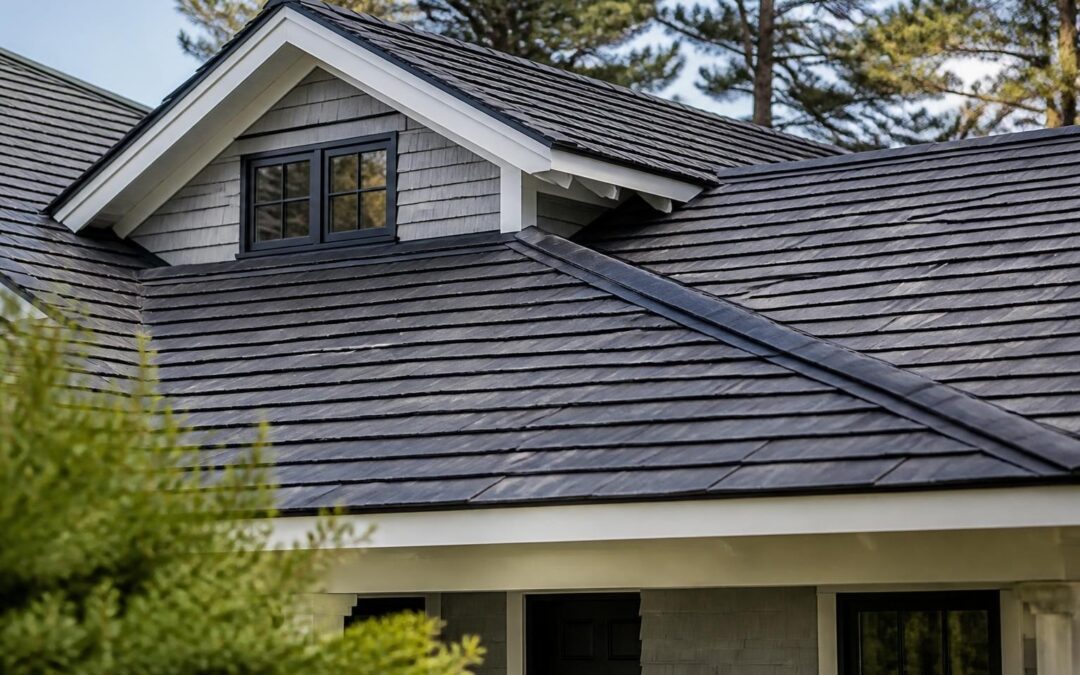
Metal shake roofing represents one of the most compelling innovations in residential roofing over the past two decades. Combining the timeless aesthetic appeal of traditional wood shake with the durability and longevity of modern metal materials, this roofing option has become increasingly popular among homeowners seeking both curb appeal and long-term value. Whether you're building a new home in Los Angeles or considering a roof replacement, understanding the advantages, costs, and installation requirements of metal shake roofing can help you make an informed decision that protects your investment for decades to come.
What Makes Metal Shake Roofing Different
Metal shake roofing is designed to replicate the classic appearance of wood shakes while delivering superior performance characteristics. The Metal Roofing Alliance defines metal shake roofing as a profile that mimics the dimensional texture and shadow lines of traditional wood shakes, but manufactured from steel, aluminum, copper, or zinc materials.
Unlike traditional wood shakes that can rot, warp, or become infested with insects, metal shake roofing maintains its structural integrity and appearance for 40 to 70 years depending on the material and coating system. The manufacturing process involves stamping or rolling metal sheets into individual shake profiles that interlock during installation.
Key Material Options
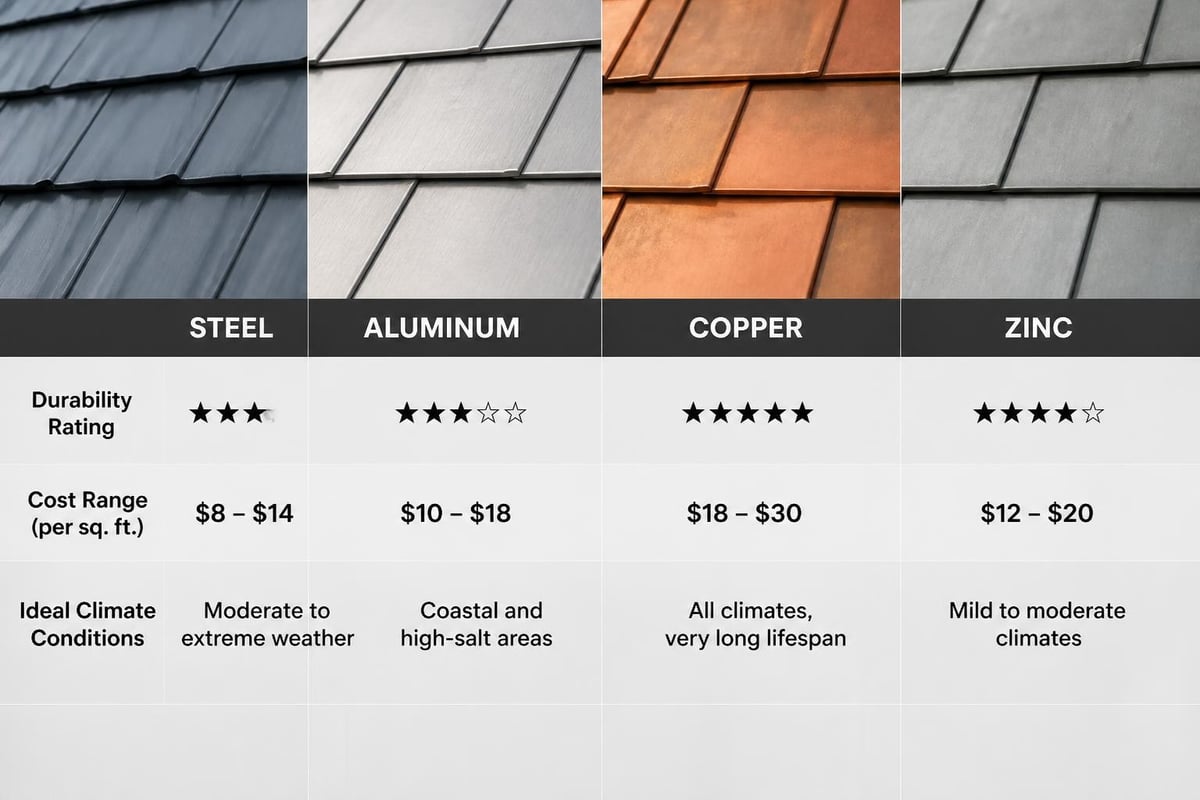
Steel represents the most common choice for metal shake roofing due to its strength-to-weight ratio and affordability. Galvanized or galvalume steel coated with protective paint systems resists rust and weathering effectively.
Aluminum offers superior corrosion resistance, making it ideal for coastal environments like many areas of Los Angeles County. Its lighter weight reduces structural load requirements but comes at a higher price point.
Copper and zinc provide premium options with distinctive aesthetics that develop natural patinas over time. These materials command the highest prices but offer unmatched longevity exceeding 100 years in many cases.
Performance Benefits and Advantages
The decision to install metal shake roofing extends far beyond aesthetic considerations. Homeowners who choose this roofing system benefit from multiple performance advantages that traditional materials cannot match.
Exceptional durability stands as the primary advantage. Metal shake roofing withstands extreme weather conditions including high winds (often rated to 120+ mph), hail, and seismic activity without cracking, breaking, or dislodging. This resilience proves particularly valuable in California where wildfires, earthquakes, and Santa Ana winds pose significant threats to conventional roofing materials.
Fire resistance provides critical protection. Most metal shake roofing products carry Class A fire ratings, the highest available classification. Unlike wood shakes that can ignite from airborne embers during wildfires, metal shakes are non-combustible and can help prevent fire spread.
Energy Efficiency and Environmental Benefits
Metal shake roofing reflects solar radiation rather than absorbing it, reducing attic temperatures by 10 to 25 degrees Fahrenheit during summer months. This thermal performance translates to lower cooling costs, with many homeowners reporting energy savings of 15 to 25 percent annually.
The reflective properties become even more pronounced with specialized cool roof coatings that meet Energy Star standards. This Old House notes that metal roofing can qualify for energy tax credits when meeting specific solar reflectance and thermal emittance thresholds.
Environmental sustainability represents another significant advantage. Metal shake roofing contains 25 to 95 percent recycled content depending on the material, and the entire roof remains 100 percent recyclable at the end of its service life. This circular lifecycle stands in stark contrast to asphalt shingles, which contribute millions of tons to landfills annually.
| Benefit Category | Metal Shake Roofing | Traditional Wood Shakes | Asphalt Shingles |
|---|---|---|---|
| Lifespan | 40-70+ years | 15-30 years | 15-25 years |
| Fire Rating | Class A | Class C (treated) | Class A (most) |
| Wind Resistance | 120+ mph | 60-90 mph | 60-110 mph |
| Maintenance | Minimal | High | Moderate |
| Energy Efficiency | Excellent | Poor | Fair |
| Recyclability | 100% | Limited | Minimal |
Cost Considerations and Return on Investment
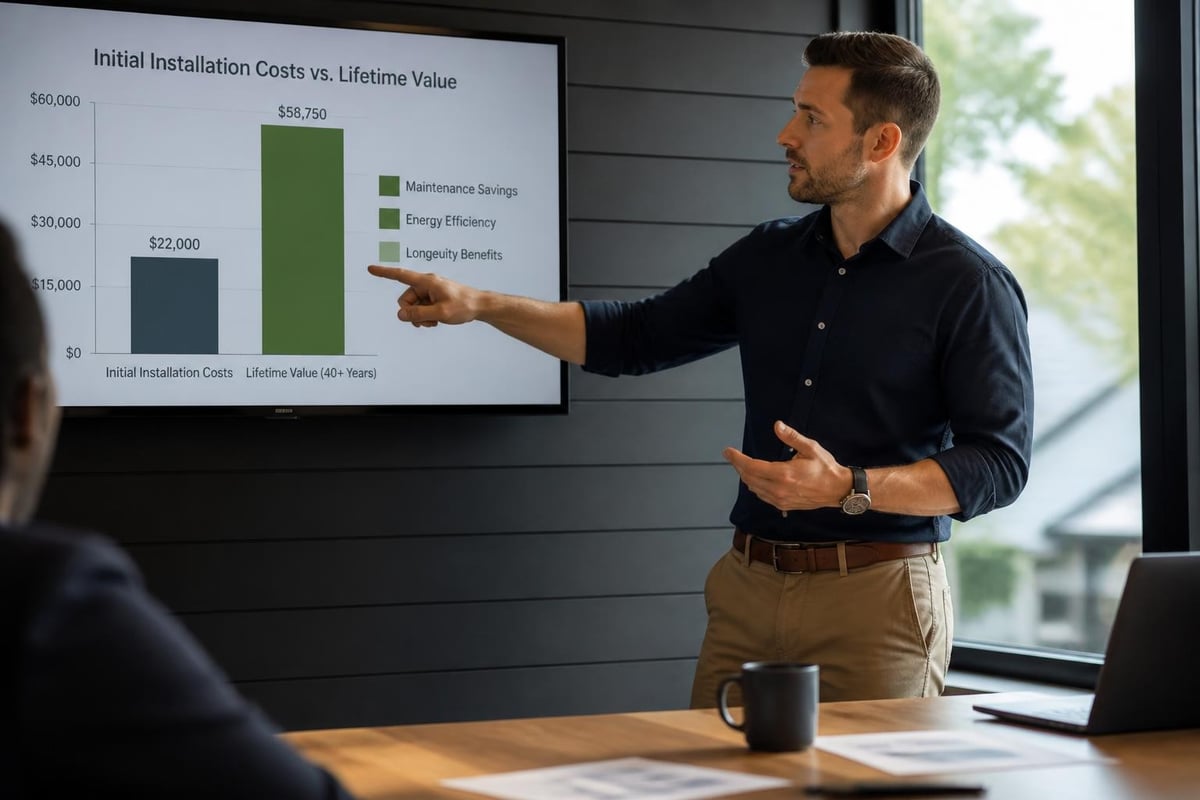
Understanding the financial investment required for metal shake roofing helps homeowners evaluate whether this option aligns with their budget and long-term plans. Initial costs exceed traditional roofing materials, but the total cost of ownership often proves competitive when considering longevity and maintenance requirements.
Material and installation costs for metal shake roofing typically range from $10 to $18 per square foot installed, depending on the metal type, coating system, profile complexity, and regional labor rates. Premium materials like copper or zinc can exceed $25 per square foot. For a typical 2,000 square-foot roof, homeowners should budget $20,000 to $36,000 for quality metal shake roofing installation.
These figures compare to $5 to $8 per square foot for standard asphalt shingles or $12 to $20 per square foot for traditional wood shakes. However, the comprehensive residential metal roofing guide emphasizes that comparing only initial costs misses the complete financial picture.
Long-Term Value Analysis
Metal shake roofing delivers superior return on investment through multiple channels:
- Extended service life eliminates the need for roof replacement every 15 to 20 years, saving the cost and disruption of multiple re-roofing projects
- Reduced maintenance expenses minimize annual upkeep costs compared to wood shakes requiring regular treatment, repair, and moss removal
- Lower insurance premiums often apply to homes with fire-resistant metal roofing, particularly in wildfire-prone areas
- Increased home value adds resale appeal, with metal roofs recouping 85 to 95 percent of installation costs according to remodeling impact studies
- Energy savings compound annually, offsetting initial premium costs over the roof's lifetime
When you're ready to invest in a premium roofing solution that combines beauty with performance, new roof installation services can help you explore metal shake options tailored to your home's architecture and your long-term goals.
Installation Process and Requirements
Proper installation proves critical to achieving the full performance potential and longevity of metal shake roofing. The process requires specialized knowledge, tools, and techniques that differ significantly from conventional roofing installations.
Pre-Installation Assessment
A professional roofing contractor begins with thorough structural evaluation. Metal shake roofing weighs between 1 and 3 pounds per square foot, significantly less than clay tiles (9 to 12 pounds) but requiring verification that the roof structure can support the new system including underlayment and battens.
Deck preparation involves inspecting and repairing the roof deck to ensure a flat, stable surface. Any damaged or deteriorated sheathing must be replaced before installation proceeds. A weather-resistant barrier typically consists of synthetic underlayment rated for metal roofing applications, which prevents moisture infiltration and provides additional thermal performance.
Installation Steps
- Install starter strips along eaves and rakes to provide proper drainage and a secure attachment point for the first course of shakes
- Begin at the lowest point of the roof, typically the eave, working upward in horizontal courses
- Interlock each shake panel according to manufacturer specifications, ensuring proper overlap and weather seal
- Secure with appropriate fasteners using corrosion-resistant screws with neoprene washers to prevent water infiltration at penetration points
- Flash valleys, ridges, and penetrations with matching metal components designed specifically for the shake profile
- Install ridge caps to complete weatherproofing and provide proper ventilation
- Trim and finish all edges, transitions, and details to achieve both weather protection and aesthetic integration
Professional installation typically takes 3 to 7 days for an average residential roof, depending on complexity, weather conditions, and crew size. The installation process detailed by This Old House emphasizes that proper fastener spacing, flashing details, and ventilation design critically impact long-term performance.
Maintenance and Longevity
One of metal shake roofing's most attractive features is its minimal maintenance requirement compared to other premium roofing materials. However, periodic inspection and simple care routines maximize lifespan and maintain appearance.
Annual inspections should examine fasteners, flashing, and coating condition. Look for loose or missing screws, which can allow water infiltration or panel movement during high winds. Check that all flashings remain properly sealed and that sealants haven't degraded.
Debris removal prevents moisture retention and potential corrosion. Clear leaves, branches, and other organic material from valleys, behind chimneys, and around roof penetrations at least twice annually, particularly after storm events. Use a soft-bristle broom or leaf blower rather than pressure washing, which can damage coatings.
Seasonal Maintenance Checklist
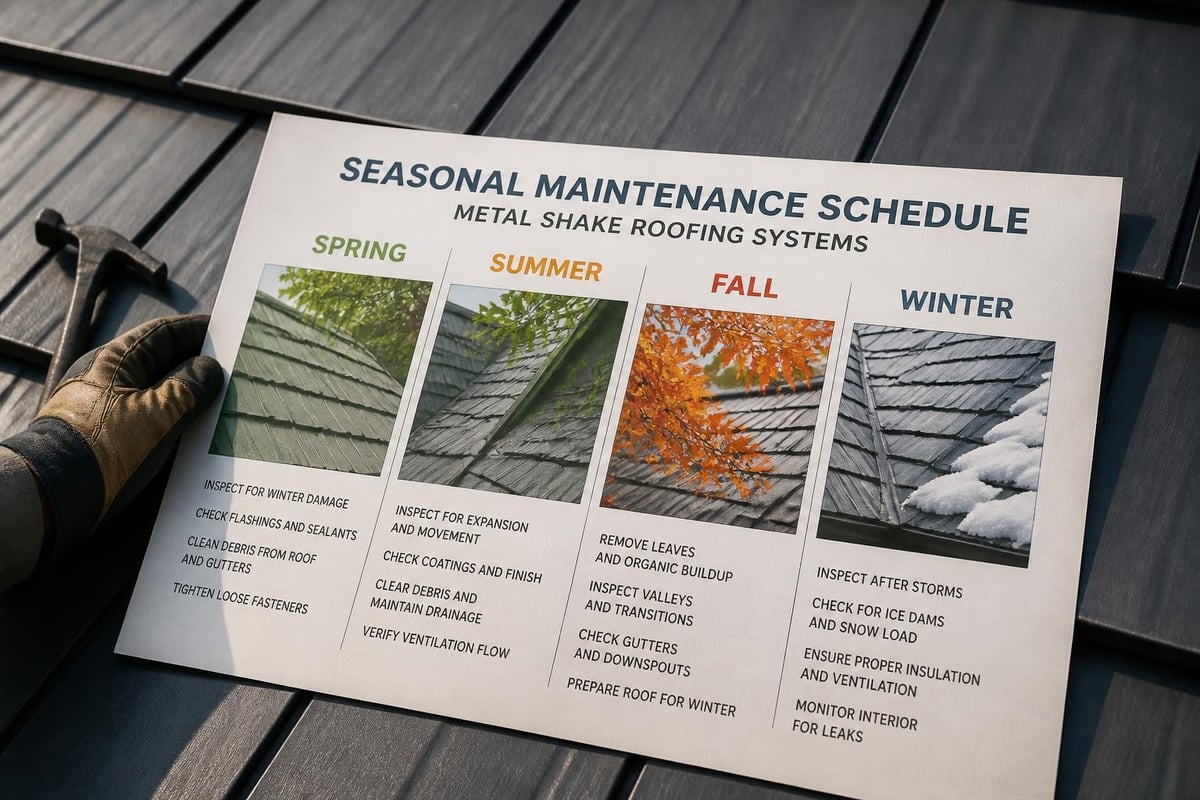
The routine metal roof maintenance checklist recommends these seasonal tasks:
- Spring: Inspect for winter damage, clear drainage paths, check fasteners after wind events
- Summer: Examine coating condition in high-UV exposure areas, verify proper ventilation function
- Fall: Remove debris accumulation, trim overhanging branches, inspect flashing seals
- Winter: Monitor for ice dam formation, ensure proper attic insulation and ventilation
Touch-up and repair needs arise infrequently but should be addressed promptly. Small scratches in the coating can be touched up with manufacturer-supplied paint to prevent rust development. Dented panels typically don't require replacement unless the coating is compromised or the dent affects water shedding.
Professional inspection every 3 to 5 years ensures that potential issues are identified before they become significant problems. Experienced roofing contractors can spot early signs of fastener backing out, coating degradation, or flashing separation that homeowners might overlook.
Design Options and Aesthetic Versatility
Metal shake roofing offers remarkable design flexibility, allowing homeowners to achieve various architectural styles while maintaining superior performance characteristics. Modern manufacturing techniques produce profiles ranging from historically accurate Victorian-era shake patterns to contemporary streamlined designs.
Profile Variations
Traditional wood shake profiles feature random-width panels with deep shadow lines that closely replicate hand-split cedar shakes. These profiles suit craftsman, cottage, and traditional architectural styles prevalent throughout Los Angeles neighborhoods.
Slate shake profiles provide the dimensional appearance of natural slate with metal's lighter weight and lower cost. The precise manufacturing creates uniform courses with subtle texture variations that complement colonial, Tudor, and French provincial homes.
Tile shake profiles simulate the curved profiles of clay or concrete tiles while delivering metal's durability. These designs work particularly well on Spanish revival, Mediterranean, and contemporary southwestern architecture common in California.
Color and Finish Options
Factory-applied finishes utilize advanced coating technologies that provide both protection and aesthetic appeal. Kynar 500 or Hylar 5000 PVDF finishes offer exceptional color retention, chalk resistance, and weathering performance backed by 30 to 40-year warranties.
Color selections span from earth tones mimicking natural wood or stone to bold contemporary hues. Popular choices for Los Angeles homes include:
- Weathered wood tones (cedar, driftwood, charcoal)
- Stone colors (slate gray, terracotta, weathered copper)
- Traditional shades (forest green, barn red, black)
- Contemporary options (bronze, pewter, galvanized silver)
Custom color matching enables perfect coordination with existing architectural elements, though it typically adds 10 to 15 percent to material costs. The architects survey from Metal Architecture reveals that earth tones and medium grays dominate specification trends for residential metal shake applications in 2026.
Comparing Metal Shake to Alternative Roofing Materials
Understanding how metal shake roofing stacks up against other premium and conventional roofing options helps homeowners make informed decisions based on priorities, budget, and long-term objectives.
Traditional wood shakes offer authentic aesthetics but require extensive maintenance including regular treatment for rot, insects, and fire resistance. They're increasingly restricted in wildfire-prone areas and cost nearly as much as metal shake when accounting for ongoing maintenance and shorter lifespan. Metal shake eliminates these concerns while preserving the desired appearance.
Asphalt shingles provide the most economical initial investment but require replacement every 15 to 25 years. While architectural shingles offer improved aesthetics compared to three-tab varieties, they cannot match the dimensional depth and shadow lines of metal shake profiles. Heat absorption and limited color retention further distinguish asphalt from metal options.
Clay and concrete tiles deliver excellent longevity and fire resistance but impose significant structural loads requiring engineered roof framing. Their weight (900 to 1,100 pounds per square) versus metal shake (100 to 300 pounds per square) often necessitates structural reinforcement in retrofit applications. Tile brittleness also creates vulnerability during earthquakes and hail events.
Synthetic composite shakes attempt to bridge the gap between wood aesthetics and improved durability. However, UV degradation, impact resistance, and thermal performance typically fall short of metal shake capabilities. Most synthetic products carry 25 to 50-year warranties compared to 40 to 70 years for metal systems.
| Factor | Metal Shake | Wood Shake | Clay Tile | Asphalt Shingle |
|---|---|---|---|---|
| Initial Cost | $$$ | $$$ | $$$$ | $ |
| Lifespan | 40-70 years | 15-30 years | 50-100 years | 15-25 years |
| Weight | Light | Light | Very Heavy | Moderate |
| Fire Rating | Class A | Class C | Class A | Class A |
| Maintenance | Low | High | Low | Moderate |
| Impact Resistance | Excellent | Poor | Poor | Fair to Good |
Climate Suitability for Los Angeles and Southern California
Metal shake roofing performs exceptionally well in Southern California's Mediterranean climate, addressing regional weather challenges while maximizing comfort and efficiency benefits. Understanding local climate considerations helps optimize material selection and installation details.
Hot, dry summers characterize the Los Angeles region, with temperatures frequently exceeding 90 degrees Fahrenheit and intense solar exposure. Metal shake roofing's reflective properties significantly reduce heat transfer into living spaces, lowering cooling loads during the extended summer season. Light-colored finishes with high solar reflectance values (SRI) maximize this benefit.
Mild, wet winters bring most annual precipitation concentrated in a few months. Properly installed metal shake roofing sheds water effectively, with interlocking panel designs preventing wind-driven rain infiltration. The water infiltration testing standards outlined in ASTM E1646 and TAS 100 protocols verify that quality metal shake products resist moisture penetration under severe conditions.
Regional Weather Considerations
Wildfire risk represents a critical concern across Los Angeles County and surrounding areas. Metal shake roofing's Class A fire rating and non-combustible construction provide maximum protection when airborne embers land on the roof surface. This fire resistance often qualifies homeowners for reduced insurance premiums and satisfies building code requirements in high fire severity zones.
Santa Ana winds periodically generate sustained winds of 40 to 60 mph with gusts exceeding 80 mph. Metal shake roofing installed according to manufacturer specifications and local building codes withstands these wind events without panel loss or damage. Proper fastener selection and spacing prove essential for wind resistance in these conditions.
Seismic activity occurs regularly throughout Southern California. Metal shake roofing's lightweight construction reduces lateral loads on structural members during earthquakes. The flexible nature of metal also allows panels to move slightly without cracking, unlike rigid tile materials that can break during seismic events.
Minimal freeze-thaw cycling in coastal and valley areas reduces the weathering stresses that challenge roofing systems in colder climates. This mild temperature profile allows metal shake coatings to maintain their integrity and appearance for extended periods.
Product Certification and Quality Standards
Selecting metal shake roofing backed by recognized testing and certification ensures that products deliver promised performance characteristics. Understanding key standards helps homeowners and contractors evaluate product quality and suitability.
UL 2218 impact resistance testing evaluates how roofing materials withstand hail and debris impacts. Metal shake products typically achieve Class 4 ratings, the highest available, by resisting penetration from 2-inch steel balls dropped from 20 feet. This certification proves particularly valuable in areas prone to severe weather.
ASTM testing protocols verify multiple performance characteristics including wind resistance (ASTM D3161, ASTM D7158), fire resistance (ASTM E108), and weathering durability (ASTM D3679). Products meeting or exceeding these standards demonstrate engineering rigor and quality manufacturing.
Energy Star certification identifies metal roofing products meeting solar reflectance and thermal emittance criteria that reduce cooling energy consumption. In Los Angeles and other warm climates, selecting Energy Star rated products maximizes energy savings and may qualify for utility rebates or tax incentives.
Manufacturer Warranties
Comprehensive warranty coverage protects the substantial investment in metal shake roofing:
- Paint finish warranties typically span 30 to 40 years against excessive fading, chalking, or peeling when PVDF coatings are specified
- Substrate warranties cover metal perforation from corrosion for 20 to 50 years depending on material gauge and coating system
- Weather-tightness warranties guarantee that properly installed systems resist water infiltration for specified periods, often 20 to 30 years
- Wind resistance warranties certify performance to stated wind speeds when installation follows manufacturer specifications
Reading warranty terms carefully reveals coverage limitations, required maintenance, and transferability provisions. The Consumer Reports roofing guide emphasizes that understanding warranty exclusions and claim procedures before purchase prevents disappointment if issues arise.
Installation Considerations Specific to Los Angeles
Local building codes, climate conditions, and architectural traditions influence metal shake roofing installation approaches in the Los Angeles area. Working with contractors familiar with regional requirements ensures compliant, optimized installations.
Title 24 energy compliance establishes minimum energy efficiency standards for California buildings. Metal shake roofing can help satisfy cool roof requirements through appropriate color and coating selections. Contractors should verify that specified products meet or exceed Title 24 standards for the climate zone.
Fire hazard severity zones throughout Los Angeles County impose specific requirements for roofing materials in designated areas. While metal shake roofing's Class A rating satisfies most requirements, local jurisdictions may have additional provisions for ember resistance, underlayment specifications, or edge detailing.
Historic preservation districts in areas like Hancock Park, Windsor Square, or West Adams may restrict roofing material choices or require design review board approval. Metal shake profiles can often satisfy aesthetic guidelines while delivering modern performance, but securing approvals before proceeding prevents costly modifications.
Working with Professional Contractors
Selecting qualified installation contractors proves critical to achieving optimal metal shake roofing performance. Look for contractors with:
- Manufacturer certification for the specified metal shake product line
- Documented experience with metal roofing installations in Los Angeles area
- Current California contractor licensing and insurance coverage
- References from recent metal shake roofing projects
- Understanding of local code requirements and permit processes
Requesting detailed proposals that specify materials, installation methods, warranty coverage, and project timelines enables accurate comparison between contractors. The lowest bid rarely delivers the best value when specialized installation expertise significantly impacts long-term performance.
Environmental Impact and Sustainability
Metal shake roofing aligns with growing homeowner interest in sustainable building practices and reduced environmental footprint. Multiple factors contribute to metal roofing's position as one of the most environmentally responsible roofing choices.
Recycled content in metal shake products ranges from 25 percent in virgin aluminum to 95 percent in steel products. This high recycled material percentage reduces mining impacts and manufacturing energy consumption compared to products made entirely from virgin materials.
End-of-life recyclability ensures that metal shake roofing remains a valuable commodity rather than waste. When replacement eventually becomes necessary, the entire roof can be recycled without quality degradation. Steel and aluminum retain full properties through unlimited recycling cycles.
Energy savings from reflective metal roofing reduce power plant emissions throughout the roof's service life. The cumulative effect of lower cooling loads over 40 to 70 years significantly exceeds the embodied energy in manufacturing and installation.
Durability and longevity represent perhaps the most significant environmental benefits. By lasting two to four times longer than conventional roofing materials, metal shake roofing reduces the frequency of manufacturing, transportation, installation, and disposal activities. This extended service life minimizes resource consumption and waste generation per year of protection.
Storm water quality benefits from metal roofing's smooth, inert surface. Unlike asphalt shingles that can leach petroleum compounds or treated wood that releases preservative chemicals, metal shake roofing contributes minimal pollutants to runoff. Some jurisdictions even allow rainwater harvested from metal roofs for irrigation without treatment.
Metal shake roofing delivers an exceptional combination of aesthetic appeal, durability, and long-term value that makes it an increasingly popular choice for discerning homeowners throughout Los Angeles and Southern California. From fire resistance and energy efficiency to minimal maintenance and environmental sustainability, the benefits justify the initial investment through decades of reliable performance. Whether you're building new or replacing an aging roof, Proof Your Roof brings the expertise and commitment to quality that metal shake roofing installation demands, helping you protect your home with a roofing system that combines timeless beauty with cutting-edge performance.