
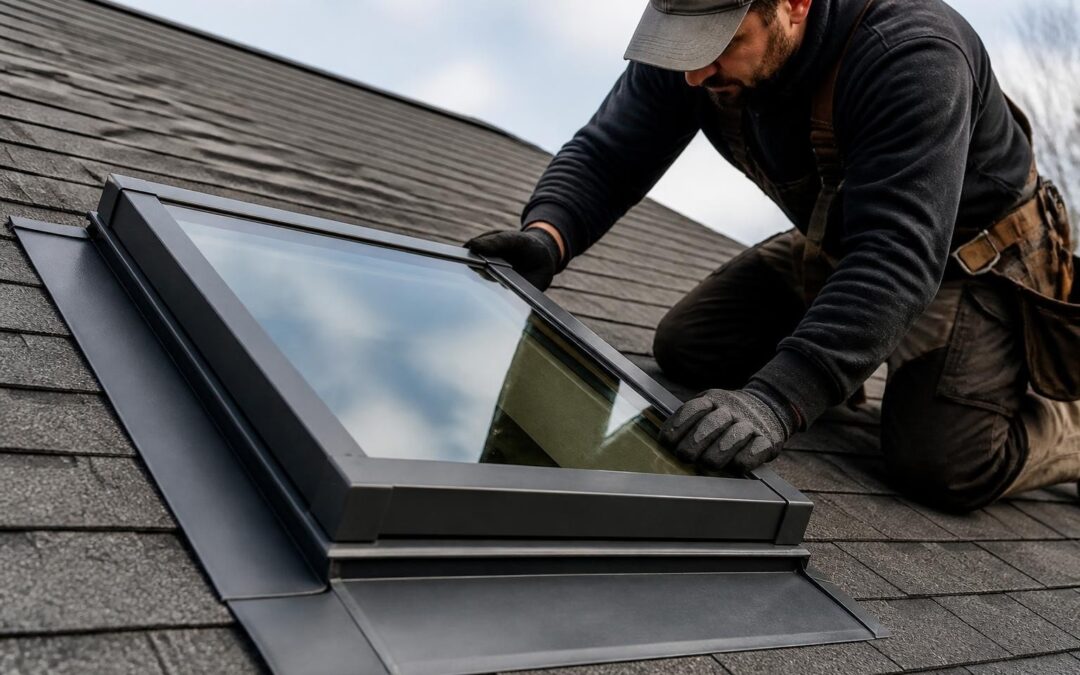
Finding reliable skylight installation near me requires careful consideration of contractor expertise, product quality, and local building requirements. In Los Angeles and surrounding areas, homeowners increasingly recognize skylights as valuable investments that enhance natural lighting, reduce energy costs, and improve property value. Professional installation ensures structural integrity, proper weatherproofing, and compliance with California's stringent building codes. Understanding the installation process, material options, and contractor selection criteria empowers homeowners to make informed decisions that protect their investment and deliver lasting results.
Understanding Skylight Installation Requirements in Los Angeles
Skylight installation near me involves more than simply cutting a hole in your roof. California's building codes mandate specific structural, thermal, and safety requirements that directly impact installation complexity and cost.
Structural Considerations for Roof Openings
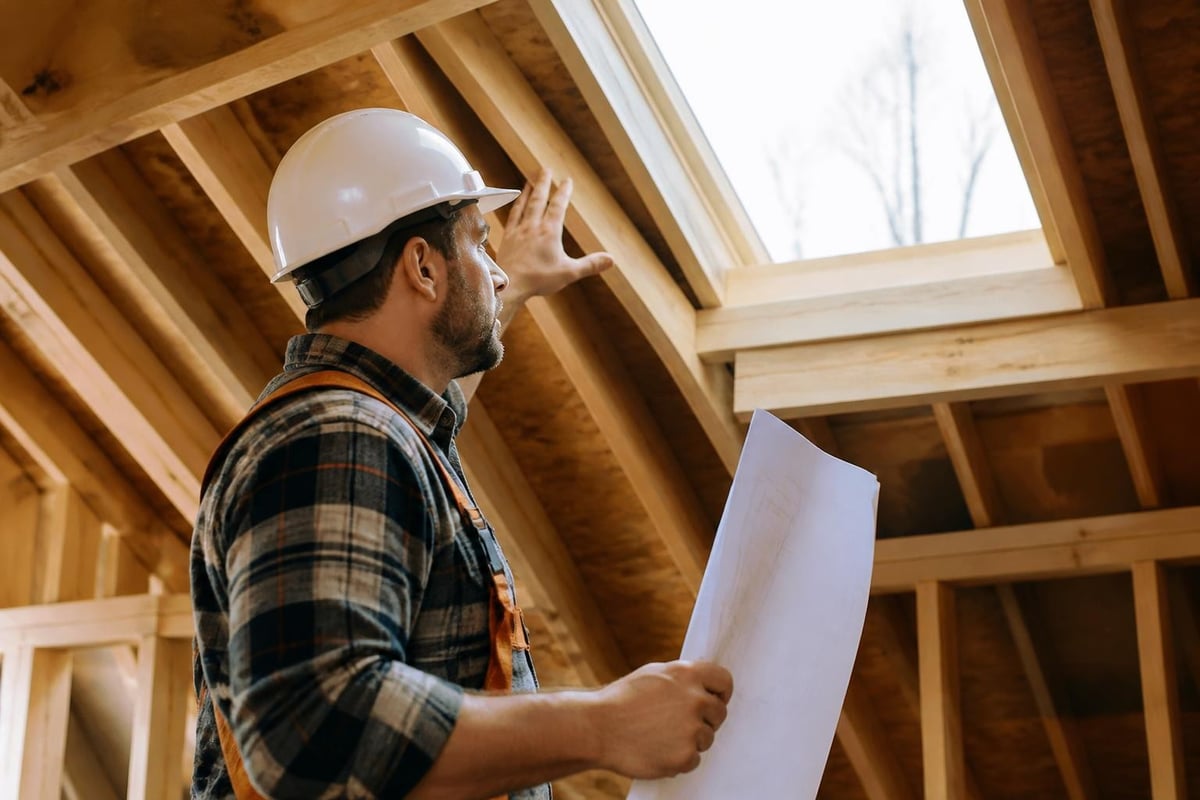
Professional installers must evaluate your roof's framing system before creating any opening. Load-bearing capacity determines whether additional headers or support beams are necessary to maintain structural integrity. Most installations require cutting through rafters or trusses, necessitating proper reinforcement according to International Residential Code standards.
The roof pitch significantly affects installation difficulty and skylight selection. Steeper pitches common in traditional Los Angeles homes require different mounting techniques and flashing systems compared to low-slope commercial applications. Your contractor should assess pitch compatibility during the initial consultation.
Energy Code Compliance and Performance Standards
California's Title 24 energy standards impose strict requirements on skylight thermal performance. The NFRC certification database provides verified performance ratings for U-factor, Solar Heat Gain Coefficient (SHGC), and Visible Transmittance (VT) that determine code compliance.
| Performance Metric | Climate Zone 6 (LA) | Purpose |
|---|---|---|
| U-Factor | ≤ 0.50 | Heat transfer resistance |
| SHGC | ≤ 0.30 | Solar heat management |
| VT | ≥ 0.40 | Daylight transmission |
Selecting ENERGY STAR certified skylights ensures compliance while maximizing energy efficiency. The ENERGY STAR technical criteria establishes performance thresholds that exceed minimum code requirements, delivering superior long-term value through reduced cooling costs in Southern California's climate.
Types of Skylights for Los Angeles Homes
When searching for skylight installation near me, understanding available product types helps align your project goals with appropriate solutions. Each skylight category offers distinct advantages for specific applications and budgets.
Fixed Skylights
Fixed skylights provide maximum natural light without ventilation capability. These sealed units offer superior weather resistance and thermal performance compared to operable models. Cost-effective and low-maintenance, fixed skylights suit living rooms, hallways, and spaces where ventilation isn't required.
Glass options include clear, bronze-tinted, or low-E coatings that control solar heat gain while maintaining light transmission. Acrylic alternatives offer impact resistance at lower cost but may yellow over time under intense UV exposure common in Los Angeles.
Vented Skylights
Vented or operable skylights combine natural lighting with controllable ventilation. Manual or electric operators allow homeowners to exhaust hot air, particularly beneficial in kitchens, bathrooms, and upper-story spaces where heat accumulates.
Electric models integrate with home automation systems and rain sensors that automatically close units when precipitation begins. This smart functionality justifies the premium cost for homeowners prioritizing convenience and protection.
Tubular Daylighting Devices
Tubular skylights channel natural light through reflective tubes into interior spaces where traditional skylights aren't feasible. These compact units illuminate hallways, closets, and bathrooms without extensive structural modification.
Installation complexity decreases significantly compared to traditional skylights, reducing labor costs and roof penetration risks. The smaller footprint minimizes thermal bridging while delivering surprising light output in compact spaces.
The Professional Installation Process
Quality skylight installation near me follows systematic procedures that ensure weatherproofing, structural integrity, and manufacturer warranty compliance. Understanding these steps helps homeowners evaluate contractor competence and project timelines.
Pre-Installation Planning and Permits
Professional contractors begin with detailed site assessment and measurement verification. Precise skylight positioning maximizes natural light while avoiding conflicts with roof framing, ventilation systems, and existing utilities.
Los Angeles County requires building permits for skylight installation, triggering plan review and inspection protocols. Experienced contractors handle permit applications, incorporating required calculations and installation details that satisfy building department requirements.
Timeline expectations typically include:
- Initial consultation and site evaluation (1-2 days)
- Permit application and approval (2-4 weeks)
- Product ordering and delivery (1-3 weeks)
- Installation completion (1-2 days per skylight)
- Final inspection and approval (1 week)
Roof Opening and Structural Preparation
Installation begins with precise measurement transfer from interior ceiling to exterior roof surface. Contractors verify clearance from rafters and trusses before cutting, minimizing structural modification requirements.
Creating the roof opening involves removing shingles, cutting through sheathing, and potentially modifying framing members. Professional installers install headers and support framing according to engineered specifications, maintaining load distribution throughout the roof structure.
Interior ceiling modifications create the light shaft connecting roof opening to living space. Angled shafts maximize light distribution, while straight shafts suit specific architectural requirements. Drywall installation and finishing complete the interior integration.
Flashing Installation and Weatherproofing
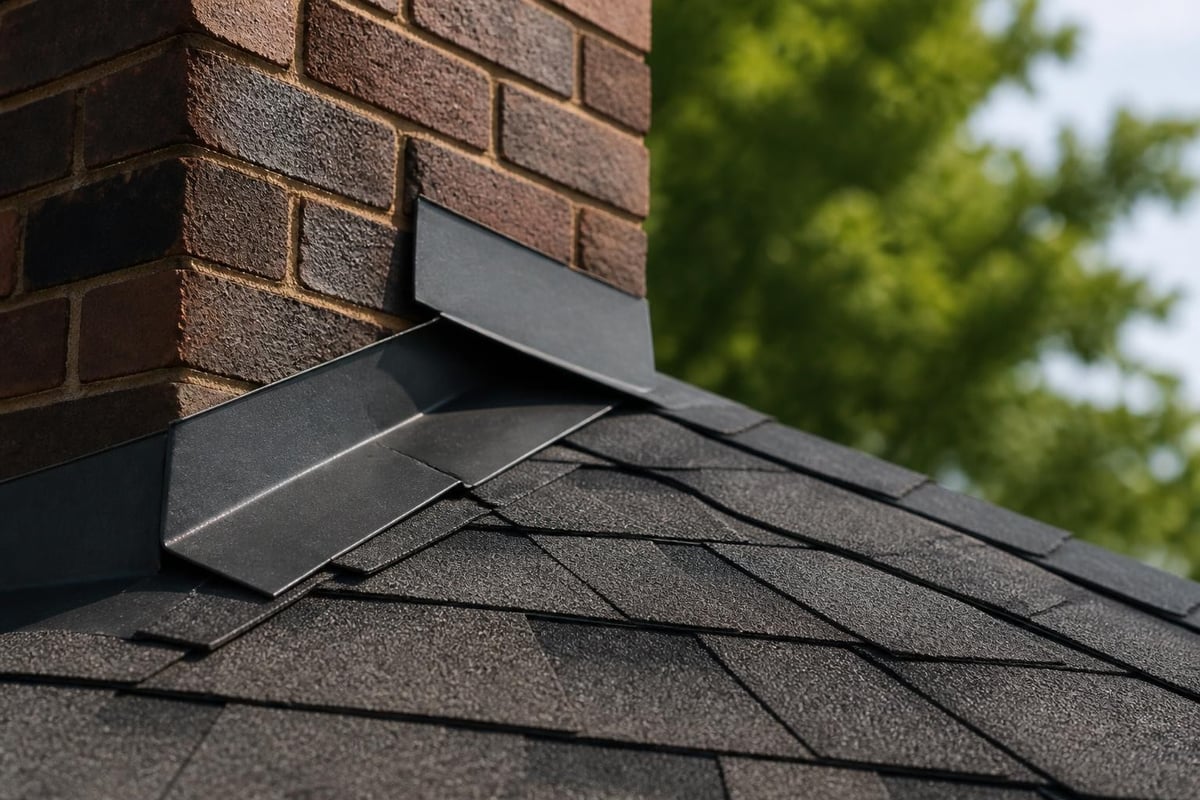
Proper flashing represents the critical weatherproofing component in skylight installation near me. Multi-piece flashing systems integrate with existing roofing materials, creating water-tight seals that prevent leaks throughout the skylight's lifespan.
Step flashing along skylight sides channels water around the unit, while head flashing diverts water from above. Continuous sill flashing at the bottom edge prevents water intrusion while allowing proper drainage. Installation sequence must follow manufacturer specifications and comply with roofing industry best practices detailed in the ASHRAE Handbook’s fenestration guidance.
Counterflashing integrates the skylight flashing system with surrounding roofing materials. For asphalt shingle roofs common throughout Los Angeles, shingles overlap flashing components in specific patterns that maintain the roof's water-shedding capability. Clay tile and metal roof applications require specialized flashing techniques matching each material's unique characteristics.
Selecting the Right Contractor for Skylight Installation
Finding qualified professionals when searching skylight installation near me requires evaluating multiple factors beyond price alone. Contractor expertise, licensing, and warranty support directly impact project outcomes and long-term satisfaction.
Licensing and Insurance Verification
California law requires roofing contractors to hold active C-39 licenses issued by the Contractors State License Board. Verify license status, bond coverage, and complaint history before signing contracts. Licensed contractors maintain liability insurance and workers' compensation coverage protecting homeowners from financial exposure.
Request certificates of insurance demonstrating current coverage limits. General liability minimums should exceed $1 million per occurrence, while workers' compensation certificates confirm employee coverage. Never accept "insurance is on file" claims without documentation.
Experience with Skylight-Specific Installation
Skylight installation near me demands specialized skills beyond general roofing competence. Evaluate contractor experience through specific questions and portfolio review:
- How many skylight installations have you completed in the past year?
- What brands and models do you typically install?
- Can you provide references for similar projects on comparable roof types?
- How do you address roof pitch challenges and custom flashing requirements?
Experienced installers understand manufacturer installation requirements and recognize situations requiring engineered solutions. They maintain relationships with building inspectors and navigate permit processes efficiently.
Warranty Coverage and Support
Comprehensive warranty protection includes both product warranties from manufacturers and workmanship guarantees from installers. Quality contractors offer minimum 10-year workmanship warranties covering installation defects and leak issues.
Manufacturer product warranties typically provide:
| Component | Coverage Period | Coverage Details |
|---|---|---|
| Glass/Acrylic | 10-20 years | Seal failure, yellowing |
| Frame/Flashing | 10-15 years | Material defects |
| Operating Hardware | 3-5 years | Mechanical components |
Verify warranty transfer provisions if you plan to sell your home. Some warranties remain valid through ownership changes, adding value during property sales.
Cost Factors and Budget Planning
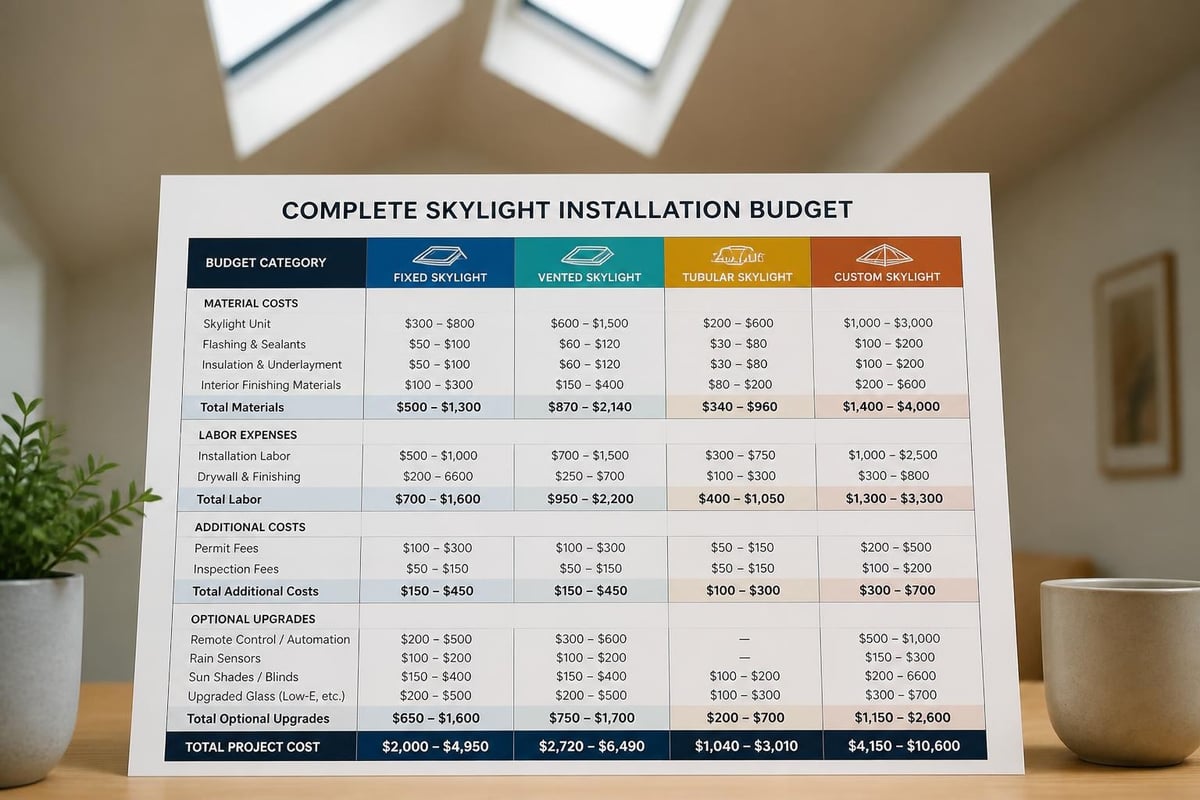
Understanding skylight installation near me pricing helps establish realistic budgets and evaluate contractor proposals effectively. Total project costs vary based on skylight type, installation complexity, and additional features.
Material and Product Costs
Skylight units range from $300 for basic fixed models to $3,000+ for premium vented skylights with electric operators and advanced glazing. Mid-range fixed skylights with low-E glass typically cost $600-$1,200, representing optimal value for most Los Angeles homeowners.
Tubular daylighting devices offer economical alternatives at $300-$800 including installation, suitable for smaller spaces requiring supplemental natural light. Their simplified installation process reduces labor requirements significantly.
Custom sizing, specialty shapes, and architectural features increase material costs substantially. Standard dimensional units (2×2, 2×4, 4×4 feet) provide cost advantages through manufacturing efficiency and simplified installation procedures.
Labor and Installation Expenses
Professional installation labor constitutes 40-60% of total project costs. Typical labor charges in Los Angeles range from $500 to $2,000 per skylight depending on complexity factors:
- Roof pitch: Steeper pitches require additional safety equipment and installation time
- Accessibility: Multi-story installations increase equipment and labor requirements
- Framing modifications: Structural alterations add engineering and carpentry costs
- Interior finishing: Drywall shaft construction and painting extend project scope
Obtaining multiple detailed proposals enables accurate cost comparison. Request itemized estimates separating materials, labor, permits, and disposal fees to identify true value differences between contractors.
Permits, Engineering, and Inspection Fees
Los Angeles County building permits for skylight installation typically cost $200-$500 based on project valuation. Complex installations requiring structural engineering analysis add $500-$1,500 for stamped calculations and plan preparation.
Budget for inspection fees and potential correction work if initial inspections identify deficiencies. Reputable contractors minimize inspection failures through knowledge of local requirements and meticulous installation practices.
Maximizing Energy Efficiency and Performance
Strategic skylight selection and placement optimize natural lighting benefits while minimizing unwanted heat gain in Southern California's climate. Performance considerations extend beyond initial installation quality.
Glazing Technology and Coatings
Modern glazing technology dramatically improves skylight thermal performance compared to older single-pane units. Double-pane insulated glass with low-E coatings reduces heat transfer while maintaining visible light transmission.
Low-E coatings reflect infrared radiation, preventing summer heat gain and winter heat loss. Spectrally selective coatings offer advanced performance by blocking heat while maximizing visible light-ideal for Los Angeles where cooling loads dominate energy consumption.
The Lawrence Berkeley National Laboratory’s daylighting research demonstrates that properly specified skylights reduce artificial lighting energy by 50-80% in residential applications. These savings offset increased cooling loads when appropriate glazing and shading strategies are implemented.
Placement and Orientation Strategies
North-facing skylights provide consistent, indirect natural light throughout the day without excessive heat gain. This orientation suits living spaces, home offices, and areas requiring stable lighting conditions.
South-facing installations maximize winter solar heat gain but require careful glazing selection or shading to prevent summer overheating. East and west orientations create morning or afternoon light emphasis with corresponding thermal considerations.
Optimal placement guidelines include:
- Position skylights over activity areas requiring natural light
- Maintain minimum 3-foot spacing from roof edges for structural integrity
- Avoid placement directly above heat-sensitive electronics or artwork
- Consider sight lines from interior spaces for aesthetic impact
- Coordinate with ceiling joists to minimize structural modifications
Integration with Shade Systems
Operable shade systems control light levels and reduce solar heat gain during peak summer months. Interior cellular shades offer affordable solutions with respectable R-values improving nighttime insulation.
Exterior shading provides superior heat rejection by preventing solar radiation from reaching the glazing. Motorized exterior shades integrate with home automation systems, adjusting automatically based on temperature sensors or time schedules.
Between-glass shade systems eliminate dust accumulation and physical damage concerns while maintaining clean aesthetics. Factory-integrated shades ensure proper fit and simplified operation compared to aftermarket additions.
Maintenance and Long-Term Care
Proper maintenance preserves skylight performance and prevents premature failure. Establishing regular inspection and cleaning schedules protects your investment over decades of service.
Routine Cleaning and Inspection
Annual exterior cleaning removes debris, organic growth, and mineral deposits that reduce light transmission. Professional roof cleaning services incorporate skylight maintenance into comprehensive roof care programs, ensuring safe access and appropriate cleaning techniques.
Interior condensation patterns indicate potential seal failures or inadequate ventilation. Early detection enables warranty claims before damage extends to surrounding ceiling materials. Monitor condensation particularly during winter months when interior-exterior temperature differentials peak.
Inspection checklist items include:
- Flashing integrity and proper overlap with roofing materials
- Sealant condition around frame perimeter
- Glass or acrylic surface condition (cracks, crazing, discoloration)
- Operating hardware function on vented models
- Interior shaft condition and paint integrity
Addressing Common Issues
Skylight leaks typically originate from flashing defects rather than skylight unit failures. Professional diagnosis identifies water entry points and appropriate repair strategies. Improperly installed or deteriorated flashing requires removal and reinstallation following correct procedures.
Condensation between double-pane glass indicates seal failure requiring glass unit replacement. Most manufacturer warranties cover seal failures within specified coverage periods when proper installation is documented.
Discolored or yellowed acrylic skylights lose light transmission efficiency and aesthetic appeal. Replacement becomes cost-effective when light output diminishes noticeably, typically after 15-20 years in high-UV environments like Los Angeles.
Integration with Roof Replacement Projects
Coordinating skylight installation near me with roof replacement creates efficiency advantages and ensures compatible component lifespans. This strategic approach maximizes value while minimizing future disruption.
Timing Considerations and Cost Savings
Installing skylights during roof replacement eliminates duplicate mobilization costs, staging expenses, and flashing integration challenges. Contractors access roof surfaces without working around existing skylights, streamlining both projects.
Combined project pricing typically delivers 15-25% savings compared to separate installations. Labor efficiency increases when crews complete multiple roof penetrations during single site mobilization periods.
Matching skylight and roofing material lifespans prevents premature skylight replacement during future roof projects. When planning roof replacement, discuss skylight options that align with your new roof's expected 20-30 year service life, ensuring all roof components age together and require replacement simultaneously rather than creating ongoing disruption and expense.
Coordinating with Roofing Materials
Flashing systems must integrate seamlessly with specific roofing materials for reliable weatherproofing. Asphalt shingle installations use step flashing techniques different from clay tile applications requiring pan flashing and custom saddles.
Metal roofing demands specialized flashing components matching panel profiles and fastening systems. Experienced contractors maintain appropriate flashing inventory for various roof types, ensuring proper material compatibility.
Color coordination between skylight frames and roofing materials enhances aesthetic integration. Many manufacturers offer frame colors matching common roofing materials, creating cohesive appearances that complement architectural styles prevalent throughout Los Angeles neighborhoods.
Evaluating Product Quality and Certifications
Third-party certifications verify skylight performance claims and installation requirements. Understanding certification programs helps identify quality products meeting or exceeding regulatory standards.
Industry Standards and Testing Protocols
NFRC (National Fenestration Rating Council) certification provides independently verified performance ratings for thermal and optical properties. These standardized metrics enable accurate product comparisons across manufacturers and models.
ICC-ES evaluation reports document product compliance with building codes and installation requirements. Sample evaluation reports demonstrate the comprehensive testing and evaluation manufacturers undergo to earn third-party recognition accepted by building officials nationwide.
AAMA (American Architectural Manufacturers Association) standards address structural performance, air infiltration, water penetration, and forced-entry resistance. Products meeting AAMA 1600 or 2410 standards demonstrate superior construction quality and durability.
Manufacturer Reputation and Support
Established manufacturers with decades of market presence offer superior warranty support and replacement part availability. Research company history, customer service reviews, and local dealer networks before finalizing product selections.
Technical support resources help contractors address installation questions and troubleshoot field conditions. Manufacturers providing detailed installation manuals, video tutorials, and responsive technical hotlines facilitate proper installation practices.
Product availability affects project timelines significantly. Mainstream manufacturers maintain regional distribution networks ensuring rapid delivery, while boutique brands may require extended lead times for custom orders or specialty configurations.
Smart Skylight Technology and Automation
Modern skylights integrate with home automation systems, providing convenience features and energy management capabilities unavailable in traditional passive units.
Automated Controls and Sensors
Rain sensors automatically close vented skylights when precipitation begins, protecting interiors from water damage during unexpected weather changes. This feature proves particularly valuable for skylights in hard-to-reach locations or vacation properties.
Temperature-based automation opens skylights when interior temperatures exceed setpoints, exhausting hot air through natural convection. These passive cooling strategies reduce air conditioning runtime and energy consumption during mild weather.
Integration with whole-home automation platforms enables smartphone control, scheduling, and scene programming. Users create lighting and ventilation scenarios triggered by time, occupancy, or environmental conditions.
Solar-Powered Operation
Solar-powered vented skylights eliminate electrical wiring requirements, simplifying installation in retrofit applications. Integrated photovoltaic panels charge batteries operating motors and electronic controls without consuming grid electricity.
These self-sufficient systems suit locations where electrical access proves difficult or costly. Remote installation sites, detached structures, and historical buildings benefit from solar operation avoiding electrical code compliance complexity.
Battery backup ensures operation during overcast conditions or nighttime when solar charging isn't available. Quality systems provide weeks of operation between full charge cycles under typical use patterns.
Climate-Specific Considerations for Southern California
Los Angeles' Mediterranean climate creates unique skylight performance requirements different from other U.S. regions. Understanding local conditions optimizes product selection and installation details.
Managing Solar Heat Gain
Intense summer sun and minimal cloud cover create substantial solar heat gain through skylights. Spectrally selective glazing blocks infrared radiation while maintaining visible light transmission, reducing cooling loads without sacrificing daylighting benefits.
External shading devices provide superior heat rejection compared to interior treatments. Motorized exterior screens deployed during peak sun exposure periods prevent solar radiation from reaching the glazing surface, eliminating heat gain at the source.
Reflective roof coatings surrounding skylights reduce radiant heat transfer from surrounding roof surfaces. Cool roofing strategies complement skylight thermal performance, creating comprehensive heat mitigation approaches.
Earthquake and Wind Resistance
Southern California's seismic activity requires skylights meeting structural performance standards for earthquake-prone regions. Proper flashing installation and frame anchoring prevent displacement during seismic events.
Santa Ana wind conditions generate substantial uplift forces on roof-mounted components. Skylight installations must resist design wind pressures specified by local building codes, typically 90-110 mph in Los Angeles County.
Impact-resistant glazing options provide protection against wind-borne debris during severe weather events. Laminated glass maintains barrier integrity even when fractured, preventing interior water intrusion and maintaining building envelope security.
Return on Investment Analysis
Skylight installation near me represents significant capital investment requiring financial justification beyond aesthetic preferences. Quantifying benefits helps homeowners make informed decisions aligned with financial goals.
Energy Savings Potential
Natural daylighting reduces artificial lighting energy consumption by 40-60% in properly illuminated spaces. At Los Angeles residential electricity rates averaging $0.28 per kWh in 2026, lighting savings accumulate to $75-$150 annually per skylight depending on usage patterns.
Passive ventilation through operable skylights reduces cooling energy during shoulder seasons when outdoor temperatures permit natural ventilation. This strategy saves an additional $50-$100 annually in moderate climate zones.
Combined energy savings create simple payback periods of 15-25 years for mid-range skylight installations. Premium energy-efficient units with advanced glazing technology achieve faster payback through superior thermal performance.
Property Value Enhancement
Real estate professionals recognize natural lighting as a premium feature influencing buyer preferences and property valuations. Strategically placed skylights enhance perceived spaciousness and architectural appeal, particularly in urban settings where traditional windows face space constraints.
Appraisal studies indicate skylights contribute 50-75% of installation costs to property values in desirable neighborhoods. Quality installations with contemporary styling and energy-efficient features command premium recognition during property sales.
Kitchen and bathroom skylights deliver strongest ROI through enhanced functionality in high-value spaces. Living area skylights provide aesthetic benefits but may generate lower financial returns depending on buyer preferences and neighborhood characteristics.
Professional skylight installation transforms living spaces through enhanced natural lighting while requiring careful attention to product selection, contractor expertise, and energy performance. Los Angeles homeowners benefit from partnering with experienced roofing specialists who understand local building requirements, climate challenges, and quality installation practices. Whether you're planning new skylight installation or coordinating with roof replacement projects, Proof Your Roof delivers the expertise and craftsmanship that ensures lasting performance and complete satisfaction throughout Los Angeles and surrounding communities.